Minoxidil for male pattern baldness is one of the most trusted treatments for hair loss, but many men aren’t sure what to expect once they start using it.
This guide walks you through the timeline of results, common reactions like shedding, the right way to apply minoxidil, and when to see a doctor for additional support.
Table of Contents
What is Minoxidil?
Minoxidil for male pattern baldness is a clinically proven treatment designed to slow hair loss and encourage regrowth in men experiencing thinning hair. It works by stimulating shrunken hair follicles, helping them produce thicker, stronger hairs over time. The most common form is topical, available as a liquid solution or foam, applied directly to thinning areas of the scalp.
There’s also oral minoxidil, sometimes prescribed off-label by doctors for hair loss. This version is stronger and carries a higher risk of side effects, so it should only be used under medical supervision.
Pro tip: For the best results with the topical solution, consistency is key — apply daily as directed, avoid skipping doses, and track your progress with photos.
Why minoxidil works:
- Extends the growth phase of hair, keeping hairs on the scalp longer
- Revives miniaturized follicles, turning fine, weak hairs into thicker strands
- Improves blood flow to the scalp, supporting healthier hair grow
Who This Post is For
This guide is designed for men experiencing early-to-moderate male pattern baldness who want to understand how Minoxidil works and what results to expect. The medication is most effective in the earlier stages, when hair follicles are still active and capable of regrowth.
Quick reminder: This information is educational and not a replacement for professional medical advice. If you have concerns about hair loss or side effects, consult a dermatologist or qualified healthcare provider.
How Minoxidil is Used
Using this treatment correctly is key to getting the best results. Proper application and consistency make a big difference.
Dosage:
- Topical solution: typically 1 mL twice daily
- Foam: usually once daily (follow your product’s instructions)
Application step:
- Start with a clean, dry scalp — don’t wash your hair immediately before applying; it’s better if your scalp is slightly dry.
- Apply minoxidil directly to thinning areas.
- Spread gently and let it dry completely. Avoid touching hair or styling until fully dry.
- Do not exceed the recommended dose — more doesn’t improve results and can increase irritation.
Safety tips:
- Wait at least 4 hours before washing your hair after application.
- Wash your hands thoroughly after applying.
- Do not share your minoxidil with anyone else — it’s for personal use only.
Pro tips for effectiveness:
- Apply at roughly the same times each day to maintain consistency.
- Use a dropper or foam applicator for even coverage.
Following these steps helps men maximize the benefits of minoxidil for male pattern baldness while minimizing side effects.
Topical Minoxidil is an over-the-counter medication approved by the U.S. Food and Drug Administration (FDA) for treating male pattern hair loss (androgenetic alopecia).
Minoxidil Timeline: What to Expect
Understanding the timeline when using minoxidil for male pattern baldness helps you set realistic expectations and stay patient. Results don’t happen overnight — consistent application is key. Your progress may also depend on your stage of hair loss
Your progress may also depend on your stage of hair loss (see the Norwood scale).”
Days 0–14:
- Mild scalp irritation, redness, or dryness may appear.
- This is normal; avoid scratching or aggressive washing.
Weeks 2–8:
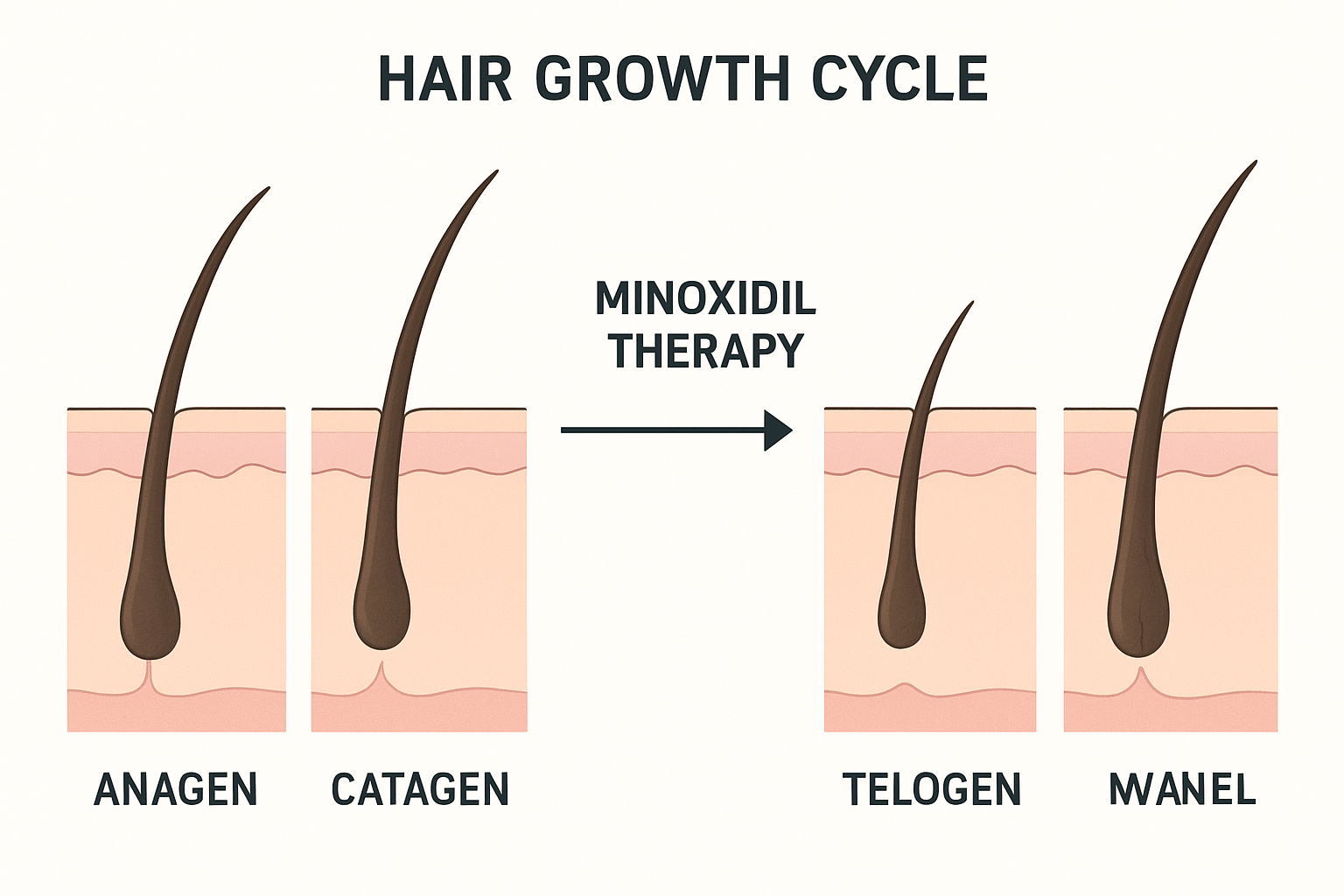
- Some users notice increased shedding. This occurs because hairs in the telogen (resting) phase are being pushed out to make room for new hairs entering the anagen (growth) phase.
- Early shedding can be alarming, but it usually indicates that minoxidil is stimulating your follicles.
Note: This shedding is different from telogen effluvium, which happens due to stress, illness, or other factors.
Months 2–4:
- Fine, soft hairs (vellus hairs) may appear, especially in thinning areas.
- Early regrowth varies widely; patience is essential.
Months 4–6:
- Hairs begin to thicken and darken.
- Take monthly photos to track progress under consistent lighting.
Important: If you are applying minoxidil consistently for 4–5 months and see no noticeable results, it may not be effective for you — consider stopping and consulting a dermatologist for alternative treatments.
Months 6–12+:
- Most noticeable improvements appear by 6–12 months.
- Remember: stopping minoxidil usually causes hair to return to its previous state within a few months.
Pro tips:
- Track progress with photos or a journal to see subtle changes.
- Patience is critical — minoxidil works gradually, not instantly.
By knowing the expected timeline, men using minoxidil for male pattern baldness can stay motivated, understand that temporary shedding is normal, and know when to reassess if results don’t appear.
According to a comprehensive minoxidil clinical review, topical minoxidil promotes hair growth by shortening the telogen phase and prolonging the anagen phase of hair follicles.”
Common Side Effects & How to Manage Them
While minoxidil for male pattern baldness is generally safe, some men may experience mild side effects. Understanding these can help you continue treatment confidently.
Common local effects (usually mild):
- Itching, redness, or dryness on the scalp
- Flaking or irritation at the application site
Management: Use gentle shampoo, avoid scratching, and consider switching from solution to foam if irritation persists.
Shedding:
- Early shedding is normal and happens as old hairs are pushed out for new growth.
- This is a temporary sign that minoxidil is working and usually resolves in a few weeks.
Unwanted hair growth:
- Sometimes hair appears on the forehead, neck, or face if minoxidil spreads unintentionally.
Tip: Wash your hands after each application and avoid touching other areas.
Rare systemic effects (oral minoxidil only):
- Lightheadedness, rapid heartbeat, or swelling
- Stop use and consult a doctor immediately if these occur.
Pro tips to reduce side effects:
- Apply only the recommended dose
- Avoid washing your hair for at least 4 hours after application
- Keep the product personal — don’t share
By knowing what to expect and how to manage side effects, men using minoxidil for male pattern baldness can stay consistent and get the best results without unnecessary worry.
Tips for Best Results
Using minoxidil for male pattern baldness effectively isn’t just about applying it — small habits and consistency make a big difference. Here’s how to maximize your results:
- Be consistent: Apply minoxidil at the same times every day. Missing doses can slow progress.
- Stick to the recommended dose: Using more than advised doesn’t speed up results and may increase irritation.
- Track your progress: Take monthly photos under the same lighting to see subtle changes over time.
- Be patient: Visible improvement usually takes 4–6 months, with full results by 12 months.
- Use the right technique: Apply to thinning areas only, and allow it to dry completely before touching hair.
- Combine wisely: Some men pair minoxidil with treatments like finasteride or microneedling, but always under medical guidance.
- Protect your scalp: Avoid harsh shampoos or styling products immediately after application to prevent irritation.
By following these tips, men using minoxidil for male pattern baldness can improve the effectiveness of treatment, reduce side effects, and maintain realistic expectations for regrowth.
Realistic Outcomes
It’s important to have realistic expectations when using minoxidil for male pattern baldness. While it can slow hair loss and stimulate regrowth, results vary from person to person.
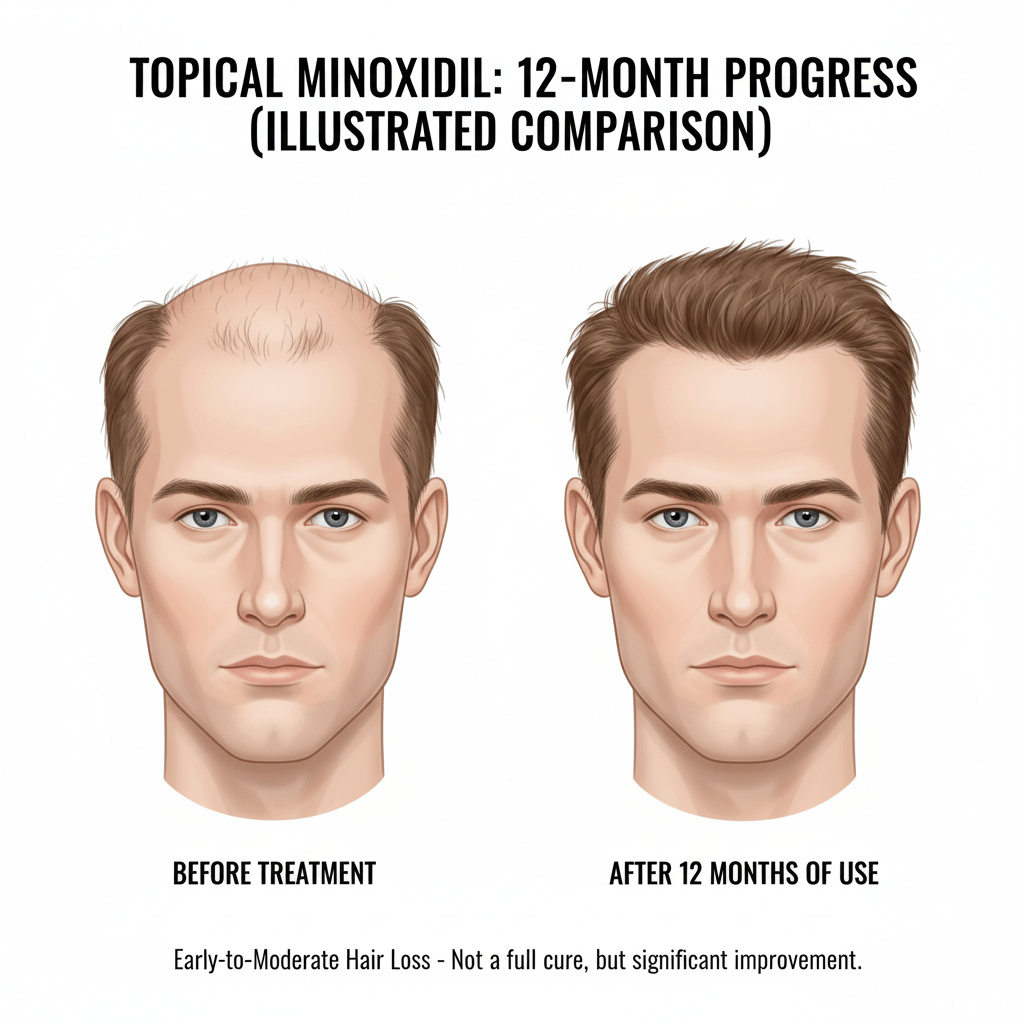
What to expect:
- Most effective in early-to-moderate hair loss — thicker regrowth is more likely when follicles are still active.
- Some men see moderate regrowth, while others may notice only slowed hair loss rather than full restoration.
- Results appear gradually — small changes over months are normal.
- Consistency is key; stopping treatment typically causes hair to return to its previous state within a few months.
Pro Tip: Track progress with photos and realistic milestones. Understanding the likely outcomes helps men using minoxidil for male pattern baldness stay motivated and patient, avoiding frustration.
Frequently Asked Questions (FAQ)
When will minoxidil start working?
Some men notice early changes in 2–4 months, but most meaningful results take 4–12 months. Stay consistent — progress is gradual
Is shedding normal after I start minoxidil?
Yes — early increased shedding is common and usually temporary; it often means follicles are cycling toward new growth.
Will minoxidil regrow a receding hairline?
Minoxidil for male pattern baldness can help early recession, but it’s less effective on long-standing or fully bald areas; thicker regrowth is likelier than full restoration.
How long should I keep using minoxidil?
Plan for a long-term commitment — many users continue daily use indefinitely to maintain gains; stopping typically returns hair to baseline within a few months.
Is oral minoxidil safe?
Oral minoxidil is used off-label by some doctors but carries higher systemic risks (blood pressure effects, swelling) and should only be taken under medical supervision.
How can I tell if minoxidil is working for me?
Use monthly photos from the same angle/lighting and watch for less hair on your brush, finer hairs turning thicker, and improved scalp coverage over 4–12 months.
When to See a Doctor
While most men can safely use minoxidil for male pattern baldness, there are times when medical advice is essential. Don’t ignore warning signs — check in with a dermatologist or healthcare provider if you experience:
- No improvement after 4–6 months of consistent use
- Severe scalp irritation (burning, persistent redness, or painful itching)
- Unusual shedding that doesn’t slow down after the first 2–3 months
- Systemic symptoms like dizziness, chest pain, rapid heartbeat, swelling in hands/feet, or shortness of breath (especially with oral minoxidil)
- Uncertainty about diagnosis — if your hair loss pattern doesn’t fit typical male pattern baldness, a doctor can rule out other causes
Pro tip: Even if you don’t have side effects, it’s smart to have at least one consultation early on. A dermatologist can confirm your diagnosis, suggest whether minoxidil is the right fit, and discuss combination treatments for better results.
By knowing when to seek medical advice, men using minoxidil for male pattern baldness can stay safe, avoid unnecessary risks, and explore the most effective treatment options.
Takeaway
Using minoxidil for male pattern baldness can be an effective way to slow hair loss and encourage regrowth — especially when started early and used consistently. Most men see results within 4–12 months, but outcomes vary, and patience is key.
- Apply correctly, every day, without skipping doses
- Expect shedding in the early weeks — it’s usually a good sign
- Track progress with photos and realistic milestones
- Know when to see a doctor if results don’t appear or side effects occur
Think of minoxidil as a long-term commitment, not a quick fix. With the right expectations and habits, it can be a valuable tool in managing male pattern baldness.
Related Posts
Discover the causes of hair loss and explore the most effective treatment options.
Learn how Finasteride can work alongside Minoxidil for better hair regrowth results.
Check the stages of male pattern baldness to understand severity and progression.
Understand potential side effects associated with Finasteride use.