Introduction: Understanding Anagen Effluvium
Losing your hair can be a deeply unsettling and emotional experience, especially when the loss happens rapidly. If you or a loved one are facing sudden, widespread hair shedding, you might be dealing with Anagen Effluvium—the medical term for hair loss that occurs during the active growth phase.
This condition is most commonly recognized as chemotherapy-induced alopecia, a consequence of medications designed to attack rapidly dividing cells. While the rapid hair loss can be dramatic, the good news is that the hair follicle itself is usually spared, making the condition overwhelmingly temporary and reversible.
In this comprehensive guide, we will explore the precise causes, symptoms, and treatment options for Anagen Effluvium, helping you distinguish fact from fiction and providing you with the knowledge needed to manage your recovery with confidence.
Table of Contents
What Is Anagen Effluvium?
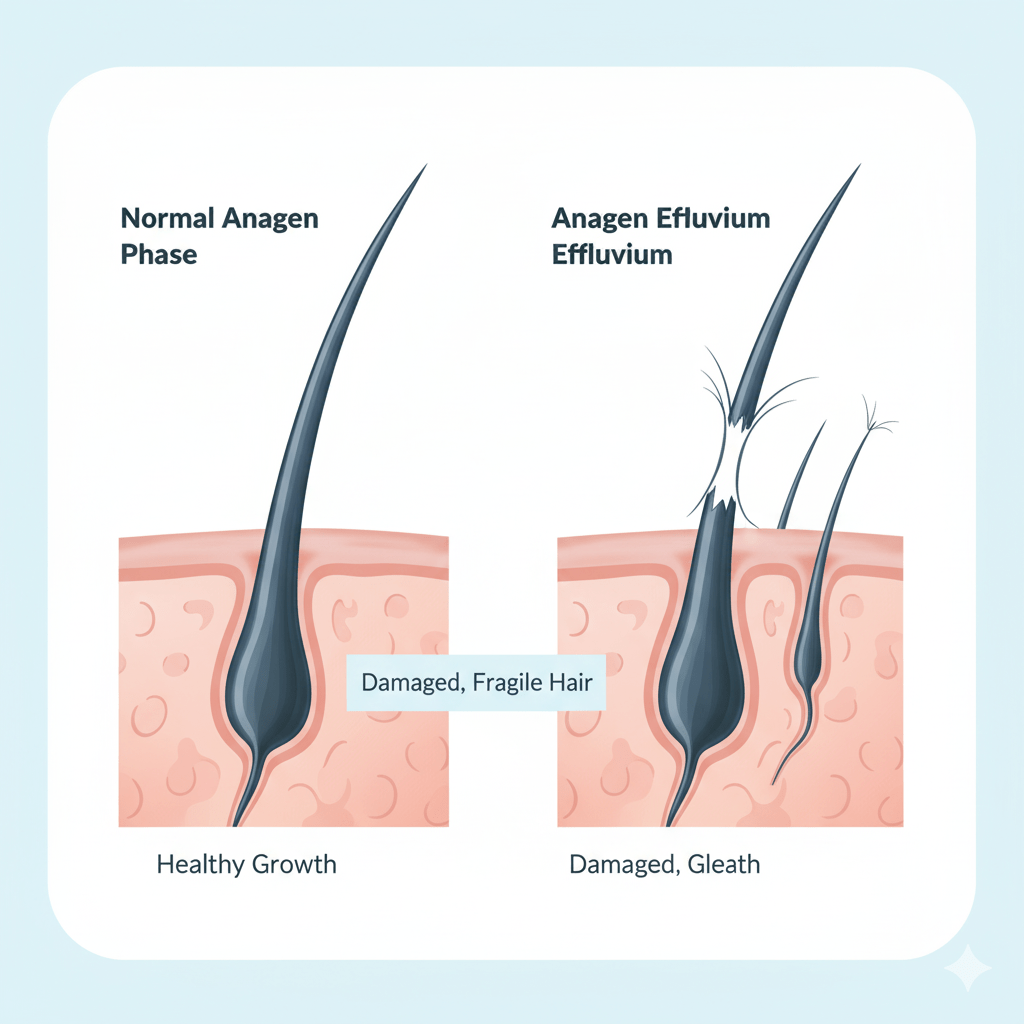
Anagen effluvium is a medical term for a type of sudden hair loss. It happens when the hairs that are actively growing (the anagen phase) suddenly stop growing and break off.
Normally, about 80–90% of the hairs on your scalp are in the growth phase. That’s why when something interferes with this process, the result can be dramatic hair shedding in a short period of time.
The most common reason this occurs is chemotherapy treatment for cancer. Many chemotherapy drugs are designed to attack fast-dividing cells, and because hair-follicle cells also divide quickly, they can get damaged too. This leads to fragile hair shafts that easily break.
Other possible triggers include:
- Radiation therapy to the scalp
- Certain toxins or poisons
The good news is that anagen effluvium is usually temporary. Once the treatment or trigger is stopped, the hair follicles begin to recover, and most people notice new hair growth within 1–3 months.
Causes of Anagen Effluvium
Anagen effluvium happens when something suddenly interferes with the fast-dividing cells inside the hair follicle. Because these cells are responsible for building the hair shaft, any severe damage causes the hair to weaken, break, and shed.
The most common causes include:
1. Chemotherapy
Most cases of anagen effluvium occur during cancer treatment. Chemotherapy drugs are designed to attack rapidly dividing cells, which unfortunately includes the hair follicles.
Common culprits are:
- Alkylating drugs (e.g., cyclophosphamide, nitrosoureas)
- Anthracyclines (e.g., doxorubicin)
- Antimetabolites (e.g., fluorouracil, methotrexate)
- Mitotic inhibitors (e.g., taxanes, vinca alkaloids)
The risk is higher with drug combinations or high doses, and hair loss often begins within days to weeks of starting treatment.
2. Radiation Therapy
When radiation is used to treat cancers of the head or neck, it can also affect the nearby hair follicles. Because these follicles are in the growth phase, they are very sensitive to radiation damage.
Hair loss usually shows up within a few days to weeks after treatment begins.
- Milder doses may cause thinning that later recovers.
- Higher doses can lead to more obvious hair loss in the treated area.
The amount and pattern of hair loss mainly depend on how much radiation is given and which part of the scalp is exposed.
3. Toxins and Poisons
Some harmful substances in the body can directly damage hair while it’s growing. These include heavy metals and toxins such as:
- Thallium
- Arsenic
- Mercury
- Bismuth
- Boron
When poisoning happens, hair loss usually starts quickly and spreads across the scalp. Doctors can sometimes even spot unique changes in the hair shaft under the microscope, which help confirm the cause.
4. Medications (Non-Chemotherapy)
While chemotherapy is the most common trigger, a few other medicines can sometimes cause sudden hair loss in the growth phase.
Reported examples include:
- Colchicine (used for gout)
- Cyclosporine (an immune-suppressing drug)
- Levodopa (used for Parkinson’s disease)
These cases are rare. Hair loss usually happens only with very high doses or in people who have an unusual sensitivity to the drug.
5. Autoimmune, Inflammatory & Other Conditions
In rare cases, certain health conditions can damage the hair while it’s growing, causing sudden shedding.
Examples include:
- Alopecia areata (diffuse type) – an autoimmune condition where the body attacks hair follicles
- Pemphigus vulgaris – a rare disease that can inflame the hair bulbs
- Severe protein malnutrition (e.g., kwashiorkor) – when the body lacks enough protein to support hair growth
Other serious illnesses, high fevers, or infections can also sometimes trigger anagen effluvium, though this is uncommon.
- For a deeper dive into how chemotherapy and other triggers cause hair loss, check the National Cancer Institute.
Symptoms of Anagen Effluvium
Anagen effluvium usually causes sudden and widespread hair loss, often within 1–3 weeks after a trigger like chemotherapy, radiation, or toxin exposure.
What You Might Notice:
- Rapid shedding: Hair loss often starts 1–3 weeks after the trigger (for example, the first chemotherapy session). Many patients notice loose hair on pillows, clothes, or in the shower.
- Widespread involvement: Hair loss is not limited to the scalp. Eyebrows, eyelashes, and even body hair (underarms, pubic area) can be affected.
- Clumps may fall out: Hair can come out in small clumps, not just as single strands.
- Scalp sensations: The scalp may feel tender, itchy, or sensitive as the hair thins.
- Non-scarring hair loss: The skin and follicles usually look normal. There’s no scarring, redness, or scaling. The follicle structure stays intact, so hair can grow back once the cause is removed.
Overall Picture:
Anagen effluvium is abrupt, diffuse hair loss from growing hairs. It happens within weeks of a trigger and does not permanently damage the follicles, so regrowth usually occurs once the cause is removed. Some patients describe their scalp as feeling numb, tingling, or itchy as the hair falls out.
How Doctors Diagnose Anagen Effluvium
If you suddenly start losing a lot of hair, doctors figure out whether it’s anagen effluvium by looking at your history, your hair, and sometimes doing simple tests.
What Doctors Ask About:
- When did your hair start falling out?
- Did you recently start chemotherapy, radiation, or any new medications?
- Any recent infections or exposure to toxins?
These questions help doctors connect the hair loss to a possible cause.
What Doctors Look For:
- The scalp usually looks normal — no redness, sores, or scarring.
- Doctors check if the hairs are broken or fragile instead of falling out with roots intact.
- They may gently pull a few hairs from different spots. In anagen effluvium, many growing hairs come out easily, which is different from other types of hair loss.
Extra Checks (If Needed):
- Sometimes a few hairs are looked at under a microscope to see if they are fragile growing hairs.
- In rare cases, a small scalp biopsy may be done. This shows that the hair follicles are still healthy, which means hair can grow back.
- Blood tests might be done to rule out other causes like thyroid problems or nutritional deficiencies, but often they’re normal if chemotherapy is the trigger.
The Bottom Line:
Doctors diagnose anagen effluvium based on:
- Sudden hair loss after a known trigger
- Broken or fragile hairs instead of intact resting hairs
- Healthy scalp follicles with no scarring
Even though it sounds technical, most of the time, your doctor can tell what’s happening just by looking at your hair and asking the right questions.
Treatment and Recovery in Anagen Effluvium
There is no quick cure to immediately reverse anagen effluvium. The focus is on gentle care, coping strategies, and supporting hair regrowth until your follicles recover.

1. Gentle Scalp and Hair Care
- Treat your hair and scalp as gently as possible.
- Use mild, sulfate-free shampoos and avoid excessive washing or harsh brushing.
- Stay away from bleaching, dyeing, perming, or chemical treatments during this time, as these can weaken fragile hairs.
- Let your hair air-dry and avoid heat styling tools.
- Using a satin pillowcase and a soft-bristle brush can reduce friction and breakage.
2. Topical Minoxidil (Rogaine)
- Minoxidil cannot prevent initial hair loss, but some studies suggest it may help speed up regrowth.
- If used, it is usually started a few weeks after treatment ends to encourage faster hair recovery.
Suggestion: Minoxidil cannot prevent initial hair loss, but some studies suggest it may help speed up regrowth after treatment. While it is not universally effective—especially for chemotherapy-induced hair loss—some people may benefit from its use during the recovery phase.
- A clear medical overview of how doctors identify Anagen Effluvium is available on DermNet NZ.
3. Scalp Cooling During Chemotherapy
- Some cancer centers offer scalp-cooling caps during chemotherapy infusions.
- Cooling the scalp can reduce blood flow to hair follicles, helping preserve some hair.
- Effectiveness varies — it’s less reliable with high-dose drugs, and some people find it uncomfortable (cold or headache).
4. Wigs, Scarves, and Head Coverings
- Sudden hair loss can be emotionally difficult, so practical coping strategies help immediately.
- Many people cut hair short or shave the head to make hair loss less noticeable and make wig fitting easier.
- Planning a wig ahead of hair loss is a good idea; in some countries, insurance may cover it with a doctor’s note.
- Hats, scarves, or turbans provide sun protection and comfort.
5. Emotional and Psychosocial Support
- Hair loss can be stressful and distressing. Counseling, support groups, or programs like “Look Good Feel Better” can be very helpful.
- Understanding that the hair loss is temporary can reduce anxiety.
6. Addressing the Underlying Cause
- For non-cancer causes (like drug toxicity), stopping or switching the medication often allows hair to grow back.
- For autoimmune triggers (like diffuse alopecia areata), treating the underlying condition may help, though regrowth can be less predictable.
Key Takeaway
- Most patients are advised: “the best treatment is time plus gentle care”.
- Hair follicles usually survive, even during chemotherapy, so hair generally grows back once the trigger is removed.
- Full regrowth may take months to a year, but patience and gentle care give the best results
Prevention of Anagen Effluvium
Unlike some other types of hair loss, anagen effluvium is often difficult to prevent because it usually results from necessary medical treatments like chemotherapy or radiation. However, there are steps doctors and patients can take to reduce the risk or lessen the severity of hair loss:
Scalp Cooling (Cold Caps)
- Cooling the scalp during chemotherapy reduces blood flow to the hair follicles, which may limit how much of the drug reaches them.
- Some patients retain more hair with this method, though results vary depending on the chemotherapy drug, dosage, and individual response.
- Not all hospitals offer this option, and it may not work for everyone.
Choice of Chemotherapy Regimen
- Doctors sometimes adjust the type, dose, or schedule of chemotherapy when possible, to minimize side effects like hair loss.
- This decision is always based on balancing effective cancer treatment with quality of life.
Protecting the Hair and Scalp
- Use gentle shampoos and avoid harsh chemicals, dyes, or heat styling during treatment.
- Keep the scalp moisturized and protected from sunburn or irritation.
- Consider cutting hair shorter before chemotherapy starts — this can make shedding less dramatic and help wigs or scarves fit better.
Nutritional Support
- While diet cannot prevent anagen effluvium directly, a well-balanced diet rich in protein, vitamins, and minerals supports overall hair and scalp health, helping recovery once treatment ends.
Psychological Preparation
- Because prevention isn’t always possible, preparing ahead with wigs, scarves, or hats can make the process easier.
- Counseling and support groups can help patients cope with the emotional impact of hair loss.
Key Point: There is no guaranteed way to prevent anagen effluvium, but scalp cooling, gentle hair care, and supportive strategies can reduce severity and help patients manage the process more comfortably. Most importantly, hair usually regrows once the triggering treatment is complete.
Common Myths About: Anagen Effluvium
Myth 1: Anagen Effluvium is the Same as Telogen Effluvium.
- Fact: These are distinct conditions. Telogen effluvium is hair shedding that occurs when a large number of hairs prematurely enter the resting (telogen) phase due to a “shock” (e.g., severe stress, fever, childbirth). Anagen effluvium is the result of an acute injury to the rapidly dividing cells of the hair follicle (the growth, or anagen, phase), often causing hair to break off very quickly, sometimes within days or weeks, leading to much more dramatic hair loss.
Myth 2: Hair Loss from Anagen Effluvium is Always Permanent.
- Fact: In most cases of chemotherapy-induced anagen effluvium, the hair loss is temporary and reversible. Once the toxic agent (like the chemotherapy drug) is stopped, the hair follicles, which were essentially “frozen in time,” usually resume normal activity. Hair regrowth typically begins within a few weeks to months after the treatment ends. However, very high-dose radiation therapy to the scalp can cause permanent hair loss by destroying the follicles.
Myth3: All Chemotherapy Drugs Cause Complete Hair Loss.
- Fact: The severity of anagen effluvium varies widely depending on the specific drug, dosage, and how it is administered. Some chemotherapy drugs are highly likely to cause complete hair loss, while others may cause only mild thinning or limited loss. Some individuals may even experience a mix of anagen and telogen effluvium, resulting in less severe hair loss.
Myth 4: You Can Prevent Anagen Effluvium with Over-the-Counter Hair Growth Products (like Minoxidil).
- Fact: Anagen effluvium is caused by systemic toxins or radiation that directly disrupt the hair follicle’s cell division. Common topical treatments used for other types of hair loss (like androgenetic alopecia) are generally ineffective for preventing or significantly reducing anagen effluvium. Scalp cooling (using cold caps) is the main intervention proven to help prevent hair loss in some patients, as it constricts blood vessels and reduces the amount of drug that reaches the follicles.
Myth: Regrown Hair Will Always Be Exactly the Same as Before.
- Fact: While the hair usually grows back, patients sometimes report a change in texture and/or color. The new hair might be curlier, straighter, finer, or even a different shade than the hair they lost. These changes can sometimes be permanent, though the hair often reverts to its original state over time.
Frequently Asked Questions About Anagen Effluvium
1. Does Anagen Effluvium make your scalp itch or feel painful?
Yes, it is very common to experience a sensitive scalp during the onset of Anagen Effluvium (the hair shedding phase). Many patients report a tingling, burning, or itching sensation known as trichodynia just before or as the hair begins to fall out rapidly. This is a common symptom of the follicular injury.
2. Is the hair loss from Anagen Effluvium ever patchy like Alopecia Areata?
While Anagen Effluvium is typically diffuse (widespread and even thinning across the scalp), it can sometimes be patchy, especially in cases caused by localized factors like radiation therapy to a specific area of the head. It can also appear patchy because hair is often lost faster in areas of friction (like the back of the head on a pillow).
3. Can diet or vitamin deficiencies cause Anagen Effluvium?
Severe or extreme protein-energy malnutrition (like Kwashiorkor) is a known but rare cause of Anagen Effluvium. While common vitamin deficiencies (like iron or Vitamin D) usually cause the milder Telogen Effluvium, extreme lack of protein can halt the cell division necessary for hair growth, leading to the severe, abrupt shedding characteristic of Anagen Effluvium.
4. What are the chances my hair will grow back curly after chemotherapy?
It is quite common for the new hair (chemo curls) to grow back with a different texture—often curlier or wavier—and sometimes a slightly different color. While the change in texture is usually temporary and the hair returns to its original form within a year, the new “chemo curls” can sometimes be permanent.
5. Can hair loss be a sign of toxin exposure besides chemotherapy?
Yes. While chemotherapy is the most common cause, exposure to high levels of certain heavy metals or toxins can also trigger Anagen Effluvium. Historically recognized culprits include poisons like thallium and arsenic, which disrupt the body’s fastest-dividing cells, including the hair matrix cells.
Conclusion: Hope and Hair Regrowth
Anagen Effluvium is a difficult and often distressing type of hair loss, but understanding its root cause—the sudden disruption of the hair’s growth phase—can provide great comfort. While it leads to rapid and sometimes complete hair shedding, most cases are temporary.
It’s crucial to remember that this condition is a direct result of necessary, life-saving medical treatment, such as chemotherapy, and does not mean your hair follicles are permanently damaged. By debunking common Anagen Effluvium myths, focusing on gentle hair care, and being patient during the recovery phase, you can move forward with confidence knowing that your hair is almost certainly on its way back.
Next Steps & Support (Call to Action)
The best tool for managing Anagen Effluvium is knowledge. If you or a loved one are preparing for treatments that may cause sudden hair loss, consider these next steps:
- Consult Your Doctor: Talk to your oncology or dermatology team about scalp cooling options to see if they are suitable for your specific chemotherapy regimen.
- Explore Support: Connect with a support group or an organization like Look Good Feel Better for aesthetic and emotional support in managing hair loss.
Related Posts
Learn how male pattern baldness differs from sudden hair loss conditions like Anagen Effluvium.
See the stages of male pattern baldness to compare with Anagen Effluvium hair loss patterns.