Introduction
Acne are one of the most common skin concerns affecting teenagers and adults alike. While occasional breakouts are normal, frequent or recurring pimples on the face can be frustrating and difficult to control.
Pimples develop when excess oil (sebum), dead skin cells, and bacteria such as Cutibacterium acnes clog the pores and trigger inflammation. According to the National Health Service, acne forms when hair follicles become blocked with oil and dead skin.
The good news is that with the right skincare routine and consistent habits, it is possible to reduce breakouts and prevent pimples from coming back. Understanding how they form is the first step toward clearer skin.
Table of Contents
Why Pimples Keep Coming Back: Understanding the Acne Cycle
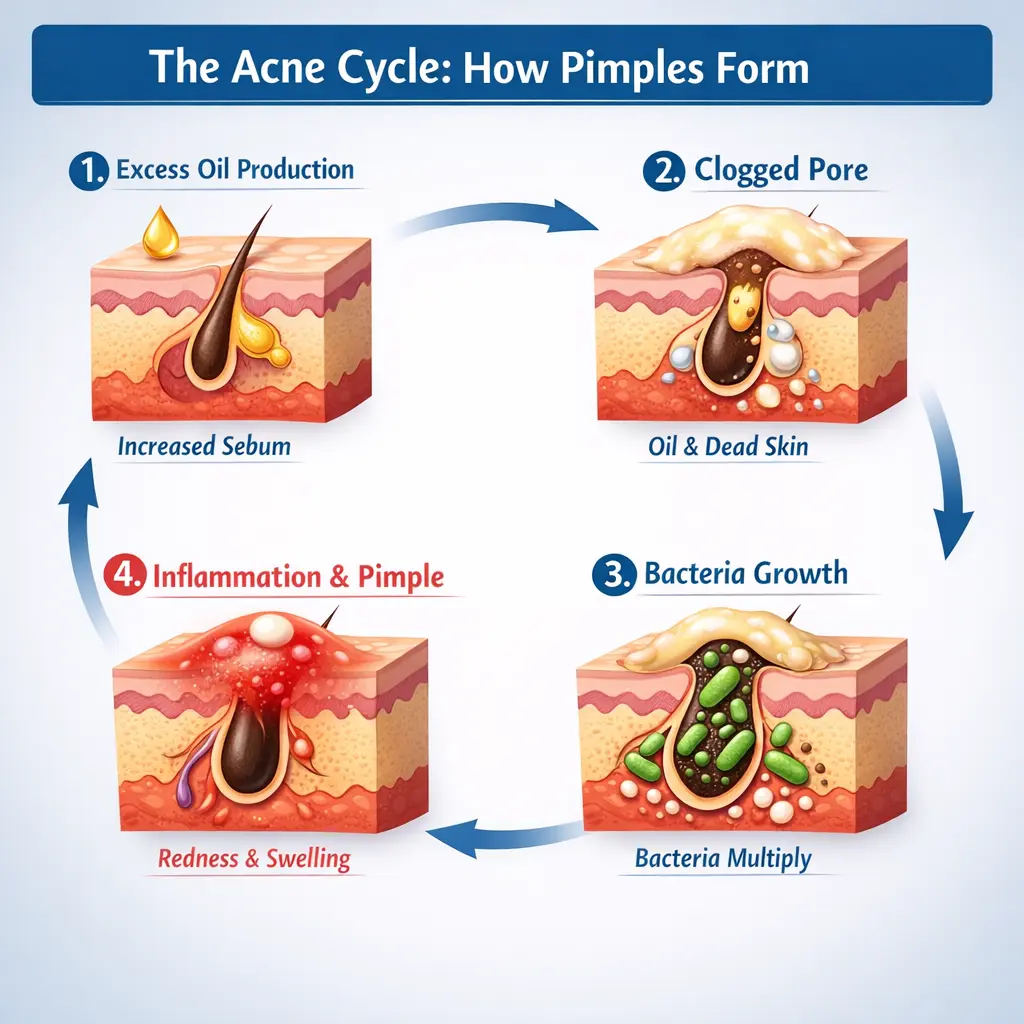
To understand how to stop pimples on face, it is important to know how they develop. Pimples do not appear suddenly; they form through a cycle beneath the skin.
Your skin naturally produces oil to stay hydrated and protected. However, hormonal changes, stress, or improper skincare can increase oil production. When excess oil mixes with dead skin cells, it can block the hair follicle.
Inside the clogged pore, Cutibacterium acnes multiplies. The body’s immune response to this bacterial growth causes redness, swelling, and sometimes pain. This is when a visible pimple appears.
If the blockage is mild, it may result in non-inflammatory acne such as whiteheads or blackheads. If inflammation increases, more severe types of acne can develop.
Types of Pimples on the Face
Pimples don’t always look or behave the same. Sometimes they appear as tiny bumps that are easy to ignore, while other times they show up as red, swollen spots that feel painful to touch. This happens because acne develops differently depending on how a pore becomes blocked and how your skin responds. In some cases, oil and dead skin simply clog the pore without causing irritation, but in others, bacteria begin to grow inside the blockage, triggering inflammation.
That’s why not every pimple needs the same treatment. Understanding the type of acne you’re dealing with is the first step toward choosing the right approach and preventing a small issue from turning into a stubborn breakout. Broadly, pimples are divided into two categories — non-inflammatory acne and inflammatory acne — with the key difference being the presence of redness, swelling, and pain. Managing mild acne early can help stop it from progressing into deeper and more noticeable breakouts later.
Why Non-Inflammatory Acne Forms
Non-inflammatory acne begins when pores become clogged with excess oil and dead skin cells.
Your skin naturally produces oil to stay soft and protected, while old skin cells are regularly shed from the surface. When oil production increases or dead skin is not cleared properly, these materials can accumulate inside the pore instead of being removed.This buildup blocks the pore, but at this stage the skin does not react with redness or swelling. Because there is no inflammation, these breakouts usually appear small and painless.
Non-inflammatory acne is commonly seen in oil-prone areas such as the nose, forehead, and chin, where the skin produces more sebum.
What happens next determines the type of mild breakout that forms.
If the clogged pore remains closed at the surface, oil and dead skin become trapped beneath the skin. This leads to the formation of a whitehead, which appears as a small white or flesh-colored bump.
If the clogged pore stays open, the trapped oil comes in contact with air. This exposure causes oxidation, turning the surface dark and forming a blackhead. This dark color is not caused by dirt, but by this natural reaction with oxygen.
Although these breakouts may seem minor, they represent an early stage of acne. Managing clogged pores at this point can help prevent them from developing into red, swollen, and painful inflammatory pimples later.
How to Treat Whiteheads
Whiteheads form when clogged pores remain closed, trapping oil and dead skin beneath the surface. Treatment focuses on gently clearing this buildup and preventing future blockage.
Salicylic acid is especially effective because it can penetrate inside the pore lining. Being oil-soluble, it moves through sebum and helps break down the trapped oil and dead skin that form the blockage. This allows the pore to gradually clear instead of remaining sealed.
Retinoids such as adapalene support this process by improving skin cell turnover. When dead skin is shed more evenly, it is less likely to accumulate and block the pore again. This helps prevent the formation of new whiteheads over time.
Niacinamide can further help by regulating oil production. When excess sebum is reduced, the chances of pores becoming clogged decrease.
With consistent use, these ingredients help clear existing whiteheads and reduce the likelihood of new ones forming.
How to Treat Blackheads
Blackheads form when a clogged pore remains open and the trapped oil inside is exposed to air. Over time, this oil thickens and hardens within the pore, which is why blackheads can be more stubborn than whiteheads.
The main goal of treatment is to dissolve the hardened oil plug and prevent new blockages from forming.
Salicylic acid is one of the most effective ingredients for blackheads because it is oil-soluble. This allows it to penetrate deep into the pore, move through the sebum, and break down the compacted oil and dead skin inside. With consistent use, it helps loosen the blockage and gradually reduce the appearance of blackheads.
Retinoids such as adapalene work differently. Instead of dissolving oil directly, they normalize skin cell turnover. This prevents excess dead skin from mixing with oil and forming new clogged pores. Over time, this reduces the formation of new blackheads and keeps pores clearer.
Alpha hydroxy acids (AHAs), such as glycolic acid, mainly work on the surface of the skin. They help remove excess dead skin cells before they settle into pores. While they do not penetrate as deeply as salicylic acid, they improve overall skin texture and support smoother-looking pores.
Clay-based treatments can also be helpful because they absorb excess surface oil. By reducing the amount of sebum sitting on the skin, they decrease the material available to clog pores.
Blackheads often take longer to improve because the oil inside the pore can be compact and persistent. Consistent treatment and patience are key to seeing gradual results.
What Is Inflammatory Acne?
Inflammatory acne is a type of acne characterized by redness, swelling, warmth, and often pain. It occurs when a clogged pore becomes irritated and triggers an inflammatory response in the skin.
Unlike non-inflammatory acne such as whiteheads and blackheads, inflammatory pimples are usually more noticeable, tender to the touch, and may take longer to heal. These breakouts can appear as papules, pustules, nodules, or cysts, depending on how deep the inflammation spreads within the skin.
Why Is Inflammatory Acne Painful, Swollen, and Red?
Inflammatory acne becomes red, swollen, and painful because the body activates its natural defense system when bacteria grow inside a clogged pore.
When the immune system detects bacteria, it sends white blood cells to the affected area to fight the infection. This process increases blood flow, which causes redness and warmth in the skin.
At the same time, fluid begins to build up around the pore, leading to swelling. Pressure from the inflamed pore can also irritate nearby nerves, which is why these pimples often feel tender or painful.
The deeper the inflammation spreads within the skin, the more severe the breakout can become. Larger lesions such as nodules and cysts are typically more painful and take longer to heal than smaller surface-level pimples.
Because inflammation is involved, squeezing these pimples can worsen irritation and increase the risk of scarring.
Types of Inflammatory Pimples
Inflammatory acne can appear in several forms depending on how deep the inflammation spreads within the skin. Some types remain close to the surface and heal relatively quickly, while others develop deeper in the skin and may require stronger treatment.
Understanding these different types helps you choose the right treatment and reduce the risk of scarring.
Papules (Mild Inflammatory Acne)
Papules are small, red, raised bumps that develop when the wall of a clogged pore becomes inflamed. They do not contain visible pus but may feel tender to the touch. Papules are considered a mild form of inflammatory acne.
Pustules (Moderate Inflammatory Acne)
Papules are small, red, raised bumps that develop when the wall of a clogged pore becomes inflamed. They do not contain visible pus but may feel tender to the touch. Papules are considered a mild form of inflammatory acne.
Nodules (Severe Inflammatory Acne)
Pustules are red, swollen pimples with a white or yellow pus-filled center. The pus forms as the immune system sends white blood cells to fight bacteria inside the pore. These are the classic “pus-filled” pimples most people recognize.
Cysts (Very Severe Inflammatory Acne)
Cysts are deep, soft, pus-filled lesions that can be painful and may lead to permanent scarring if not treated properly. Cystic acne is considered the most severe form of inflammatory acne and typically requires medical supervision.
Don’t Know Your Skin Type?
Before choosing any acne treatment, it is important to understand your skin type. Many people continue to struggle with pimples simply because they are using products that are not suitable for their skin. For example, someone with dry skin may worsen breakouts by using harsh oil-control products, while a person with oily skin may experience clogged pores from heavy moisturizers. Identifying whether your skin is oily, dry, combination, normal, or sensitive helps you choose the right ingredients and avoid unnecessary irritation.
If you are unsure about your skin type, read our complete guide on How to Identify Your Skin Type before starting any treatment routine.
Daily Habits That Help Prevent Pimples from Coming Back
Treating acne is important, but preventing new breakouts is equally essential. Even after successful treatment, pimples may return if daily skincare and lifestyle factors are not addressed.
Gentle cleansing twice a day helps remove excess oil, dirt, and dead skin without disrupting the skin barrier. Over-cleansing or using harsh scrubs can irritate the skin and trigger increased oil production.
Using a non-comedogenic moisturizer supports skin hydration without clogging pores. Skipping moisturizer can cause dryness, which may lead the skin to produce more oil and worsen breakouts, especially in hot weather when following a proper summer routine for oily skin can help maintain balance.
Sunscreen plays an important role in preventing post-acne pigmentation. Ultraviolet exposure can darken healing spots and prolong visible marks.
Avoiding habits such as touching the face frequently or squeezing pimples reduces inflammation and lowers the risk of scarring. If you are looking to adjust your routine for hot weather, following a proper summer skin routine for oily skin can also help maintain balance and prevent excess oil buildup.
Lifestyle factors such as stress and sleep also influence acne. Hormonal fluctuations associated with stress can increase oil production and worsen inflammation.
Consistent skincare and balanced daily habits help maintain clearer skin over time.
When to See a Dermatologist
While many cases of mild acne can be managed with consistent skincare and topical treatments, professional evaluation becomes important when pimples become painful, persistent, or start leaving marks.
Acne that spreads across multiple areas, forms deep nodules or cysts, or does not improve after 8 to 12 weeks of proper treatment may require medical guidance. In some cases, early dermatological intervention can prevent worsening inflammation and reduce the risk of long-term scarring.
Seeking timely advice helps ensure that treatment is tailored to your skin type and acne severity, especially when over-the-counter options are no longer effective.
Why do pimples keep coming back even after treatment?
Pimples can return if the root causes such as excess oil production, clogged pores, bacteria, or hormonal changes are not consistently managed. Irregular skincare routines, stress, and unsuitable products can also trigger recurring breakouts.
Can mild acne turn into severe acne?
Yes, mild acne such as whiteheads and blackheads can progress into inflammatory acne if left untreated. Early treatment helps prevent deeper inflammation, nodules, and cysts.
Do lifestyle habits affect acne?
Yes, factors such as stress, sleep patterns, diet, and skincare habits can influence oil production and inflammation, which may worsen breakouts.
Final Thoughts
Managing pimples is not about quick fixes but about understanding how they form and treating them consistently. From mild clogged pores to deeper inflammatory acne, each stage requires the right approach to prevent worsening and long-term skin damage.
Early care, suitable skincare habits, and timely treatment can significantly reduce breakouts and help maintain healthier skin over time. When needed, professional guidance ensures that acne is managed safely and effectively.
Clear skin is achieved through patience, consistency, and informed care rather than harsh or aggressive treatments.