Choosing the right skincare starts with one simple question: what is your skin type? Before buying any cleanser, moisturizer, or acne treatment, you must first identify your skin type correctly. Many people skip this important step and choose products based on trends or recommendations. When you fail to identify your skin type, it often leads to breakouts, dryness, irritation, or damage to your skin barrier.
In India’s hot and humid climate, using the wrong products can make oiliness worse or damage your skin barrier. That’s why learning how to identify your skin type is the first step toward building a routine that actually works.
Table of Contents
Why You Must Identify Your Skin Type Correctly
Your skin type is determined by natural oil (sebum) production, hydration levels, genetics, hormones, and environmental exposure. These biological factors influence how your skin behaves throughout the day and explain why some people experience excess shine while others struggle with dryness or sensitivity.
When oil production is high, pores are more likely to clog, increasing the risk of breakouts. When oil production is low, the skin barrier may weaken and lose moisture easily, leading to tightness and flaking. If the barrier becomes compromised, irritation and sensitivity increase over time.
Understanding and correctly identifying your skin type allows you to maintain balance — controlling excess oil when needed, supporting hydration when necessary, and protecting the skin barrier from long-term damage. This is why learning to identify your skin type accurately is the foundation of an effective skincare routine.
Types of Skin to Help You Identify Your Skin Type
Understanding how to identify your skin type becomes easier when you first understand why different skin types exist. Your skin type is primarily influenced by natural oil (sebum) production, genetics, hormonal fluctuations, and environmental factors such as climate and pollution. These biological factors determine how your skin behaves throughout the day — whether it feels oily, dry, balanced, or easily irritated
According to the American Academy of Dermatology, skin is commonly categorized into five basic types: oily, dry, normal, combination, and sensitive. Recognizing which category your skin falls into helps you choose products that support your skin barrier rather than disrupt it.
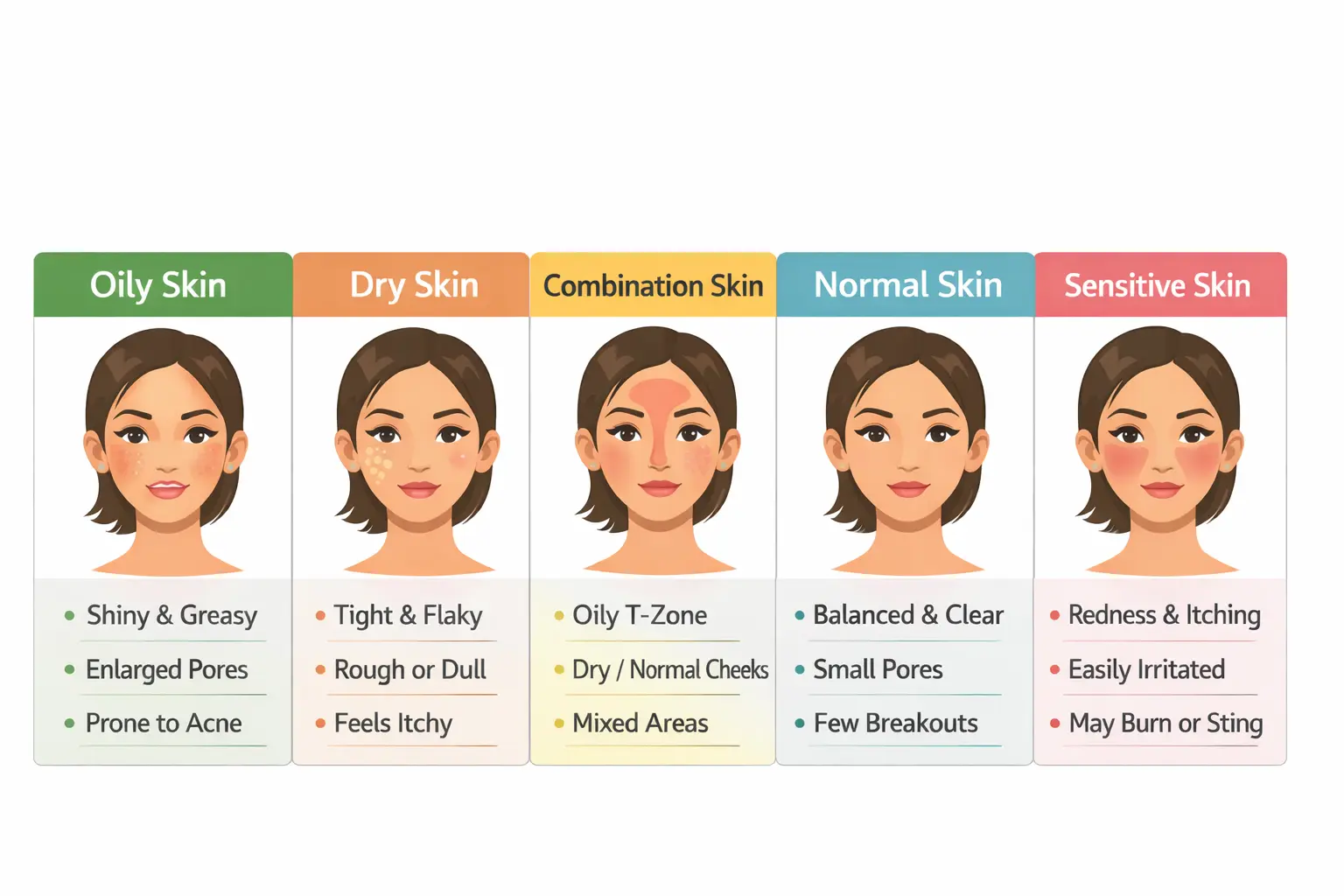
Oily Skin
Oily skin looks shiny, especially on the forehead, nose, and chin. Pores may appear larger, and breakouts like blackheads and pimples are more common. This happens because the sebaceous glands produce excess sebum. In many cases, oily skin is genetic, but hormones, stress, and hot weather can increase oil production. In humid climates, the skin may naturally produce more oil to protect itself, which can lead to clogged pores.
If you have oily skin and struggle with excess shine during summer, we’ve created a complete step-by-step guide to help you. In our Oily Skin Summer Routine, you’ll learn which cleanser to use, how to moisturize without making your skin greasy, and how to prevent summer breakouts effectively.
Dry Skin
Dry skin often feels tight after washing and may look dull or flaky. It can feel rough and may become irritated easily. This happens when the skin does not produce enough natural oil to maintain moisture. Genetics can influence dry skin, but harsh soaps, over-washing, dehydration, and weather conditions can also make it worse.
Combination Skin
Combination skin has both oily and dry areas. The T-zone usually appears shiny, while the cheeks may feel normal or slightly dry. This happens because different areas of the face have different oil gland activity. Hormonal changes and climate can also increase oil production in certain parts of the face.
Normal Skin
Normal skin feels balanced and comfortable throughout the day. It is not too oily or too dry, and breakouts are less frequent. This type occurs when oil production and hydration levels remain balanced, and the skin barrier functions properly.
Sensitive Skin
Sensitive skin reacts quickly to certain products or environmental changes. Redness, itching, or a burning sensation may appear after using new skincare. This usually happens because the skin barrier is weaker or more reactive. Overuse of harsh products, pollution, and climate changes can increase sensitivity.
How to Identify Your Skin Type
If you’re unsure about your skin type, there are several ways you can identify your skin at home. With advances in dermatology, we now better understand how skin behaves naturally — which makes simple home tests surprisingly effective. While professional evaluation is the most accurate, many people can correctly determine their skin type using structured observation methods.
Below are both home methods and advanced dermatologist methods, explained clearly.
Home Methods to Identify Your Skin Type
Home tests focus on observing how your skin behaves without interference from skincare products. These methods are simple, cost-free, and suitable for beginners.
Bare Face Test (Most Reliable Home Method)
The Bare Face Test is widely recommended because it reveals your skin’s natural oil production and moisture balance.To perform this test, wash your face with a gentle cleanser, pat it dry, and avoid applying any products. After waiting 45–60 minutes, observe how your skin feels and looks in natural light.
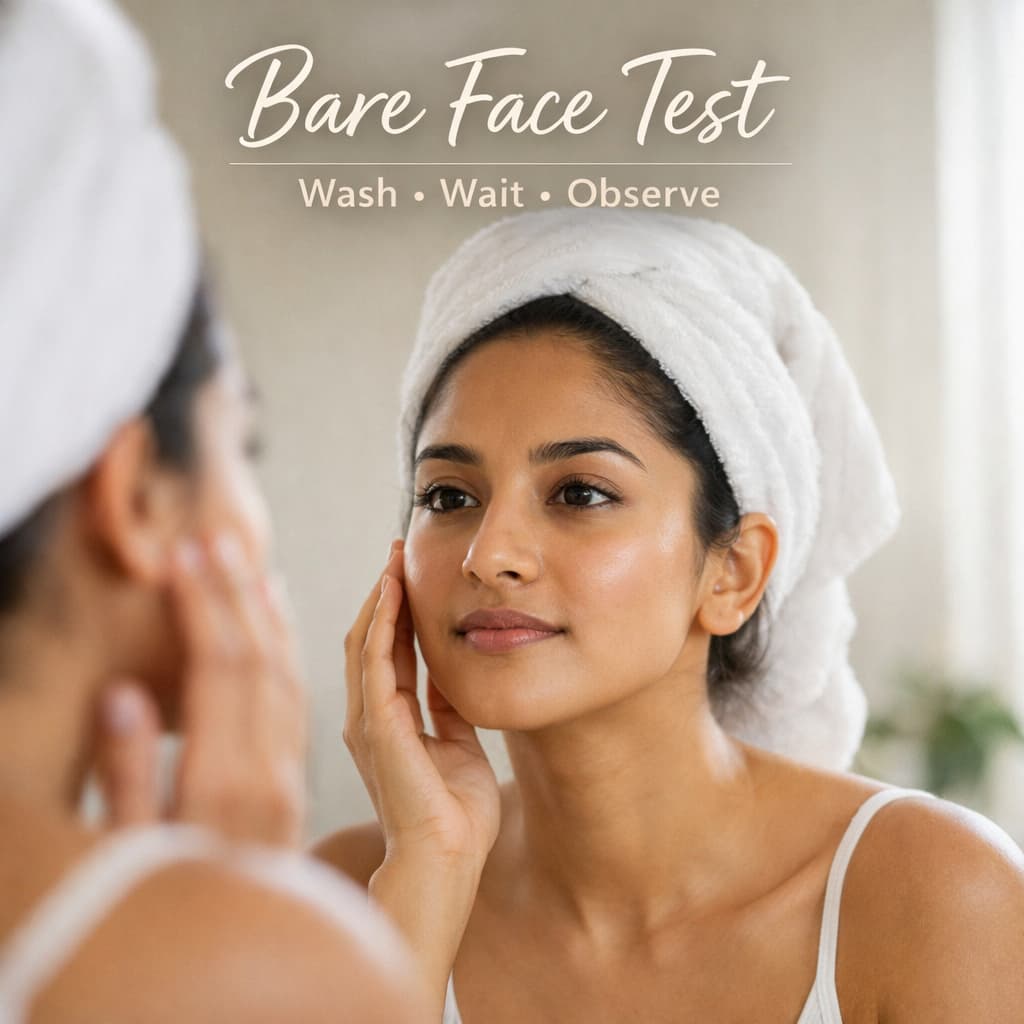
You may notice:
- Tightness or flaking → Dry skin
- Shine across the entire face → Oily skin
- Shine only on forehead and nose → Combination skin
- Comfortable and balanced feel → Normal skin
- Redness, itching, or irritation → Sensitive skin
This method works because it allows the skin barrier to return to its natural state without product influence.
Blotting Paper Test
The blotting paper test is a quicker method that focuses specifically on oil production. Gently press a tissue or blotting sheet onto different areas of your face, especially the T-zone and cheeks.
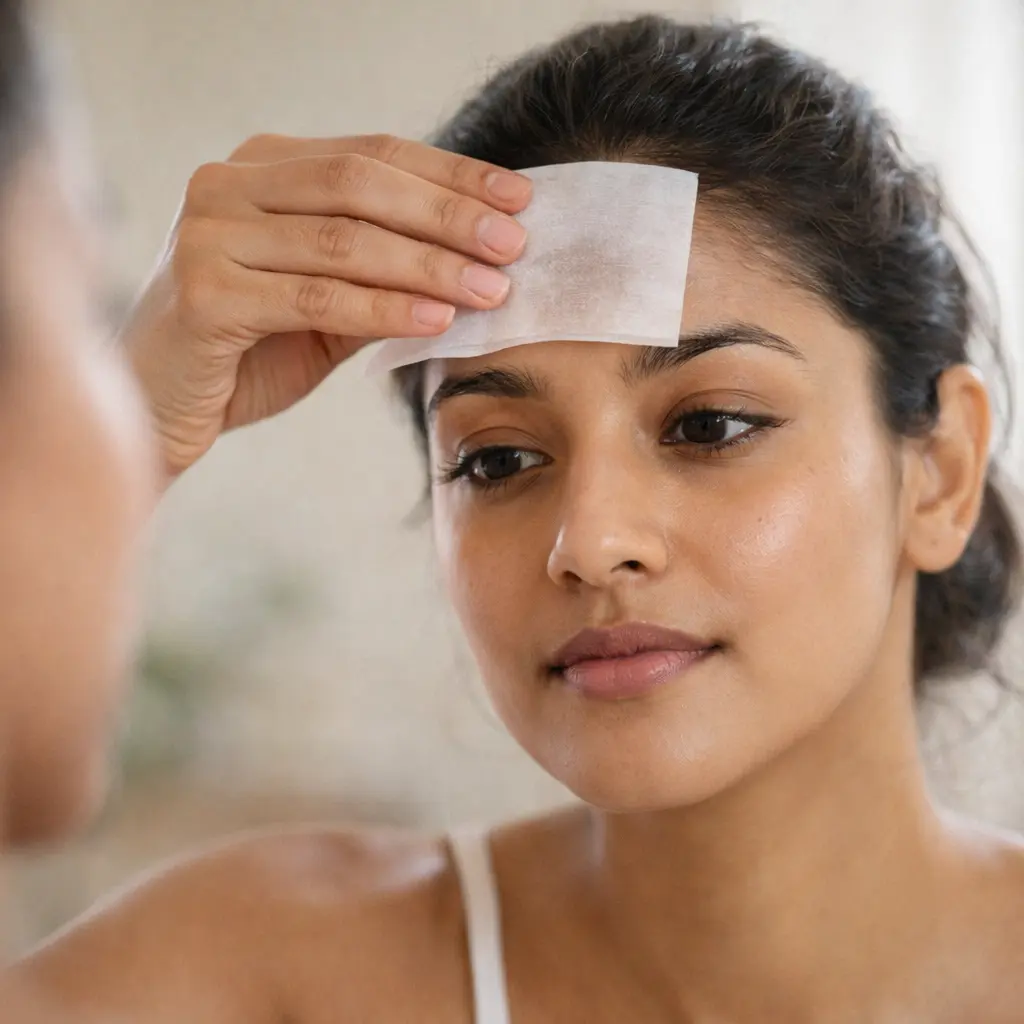
After checking the oil marks, you may observe:
- Large visible oil patches → Oily skin
- Very little to no oil → Dry skin
- Oil mainly in T-zone → Combination skin
This test is especially helpful for people who suspect they have oily or combination skin.
Visual Observation Method
Visual observation is one of the simplest ways to identify your skin type. By carefully examining your skin’s appearance, texture, shine level, and pore size over a few days, you can notice consistent patterns. For example, excess shine and enlarged pores often indicate oily skin, while tightness or flaking may suggest dryness. If your T-zone appears oily but your cheeks feel normal or dry, you may have combination skin. Balanced skin with minimal issues is typically normal, while frequent redness or irritation may point to sensitive skin. Observing these visible signs without relying on products can help you understand how your skin naturally behaves.
For example:
- Enlarged pores and frequent breakouts → Oily
- Rough texture and dullness → Dry
- Balanced appearance with minimal issues → Normal
- Oiy center with dry cheeks → Combination
- Frequent redness or burning sensation → Sensitive
This method requires honest and consistent observation over a few days.
Online Skin Type Quizzes & AI Apps
Modern skincare brands now offer digital quizzes and AI-based selfie analysis tools. Many of these are inspired by professional systems like the Baumann Skin Type System, though simplified for general users.
These tools typically ask about oiliness, sensitivity, pigmentation, and aging signs. While convenient, they rely on self-reported answers and may not always be fully accurate.They are useful for guidance
They are useful for guidance, but not a replacement for professional diagnosis.
Dermatologist Methods (Advanced Testing)
If you want a deeper and more precise skin evaluation, dermatologists use structured classification systems and scientific technologies. These methods go beyond simple observation and provide clinical insight into how your skin truly behaves.
There are four main dermatologist testing methods:
Fitzpatrick Skin Phototype
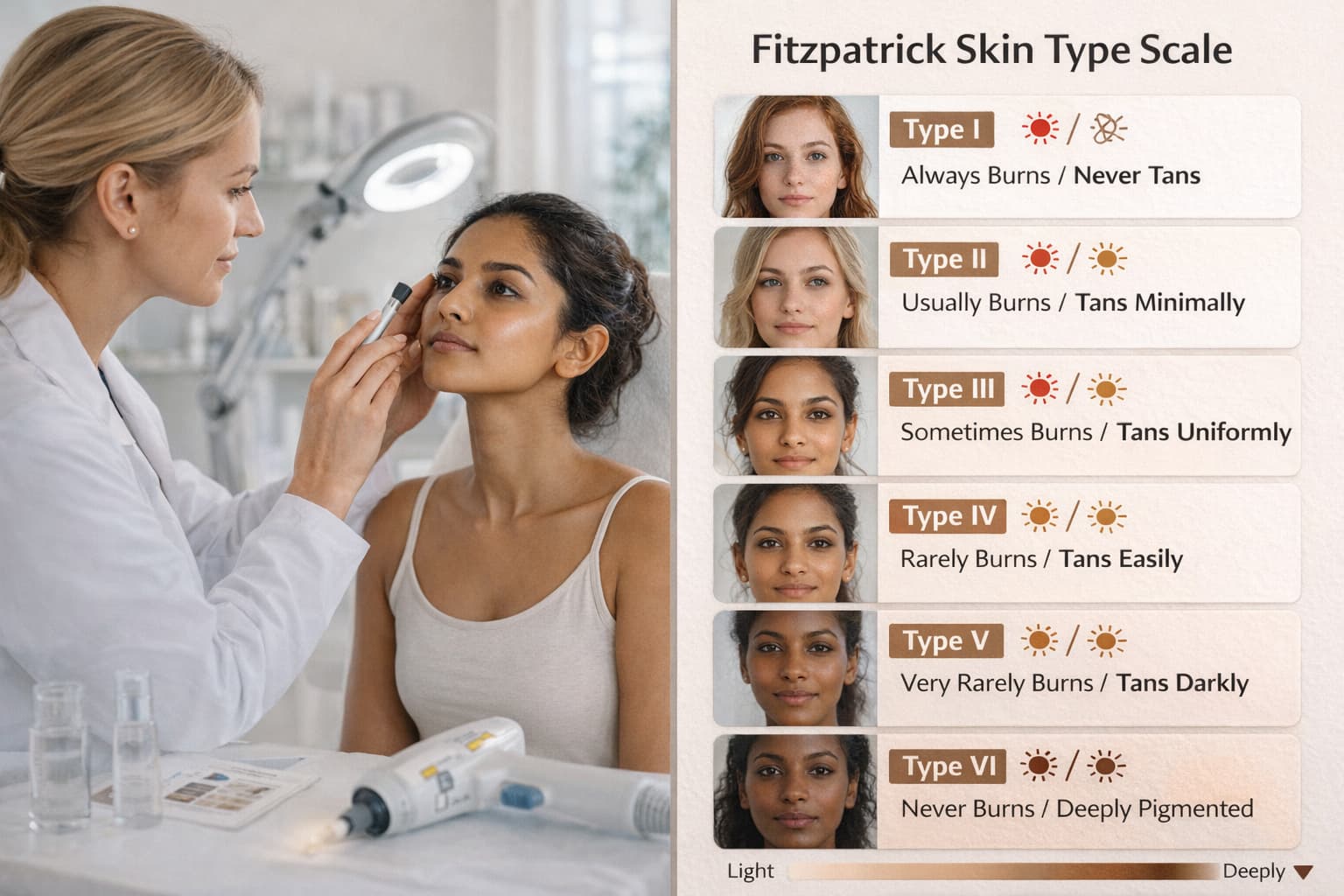
The Fitzpatrick system evaluates how your skin reacts to sun exposure. It classifies skin into six types, from Type I to Type VI, based on how easily you burn and how easily you tan. During consultation, a dermatologist asks about your natural skin color, history of sunburns, and how your skin responds after spending time in the sun.
This classification is especially important before procedures such as laser treatments, chemical peels, or pigmentation correction. Knowing your phototype helps doctors select safe treatment settings and reduce the risk of burns or post-inflammatory dark spots. While it does not determine whether your skin is oily or dry, it plays a critical role in safe treatment planning.
Baumann Skin Type System
The Baumann system provides a much deeper understanding of skin behavior. Instead of labeling someone as simply oily or dry, it evaluates four key characteristics: oil production, sensitivity level, pigmentation tendency, and aging tendency.
Patients complete a detailed questionnaire that explores how their skin behaves over time. Questions focus on shine levels, reactions to skincare products, frequency of redness or acne, history of dark spots, sun exposure, and lifestyle factors. Based on these answers, the skin is categorized into one of sixteen possible combinations, expressed as a four-letter code such as OSPW or DRNT.
This approach allows dermatologists to design highly personalized skincare routines because it identifies multiple dimensions of skin behavior rather than just one surface trait.
Instrument-Based Skin Measurement

Many clinics use specialized instruments to measure specific skin parameters. These devices provide objective numerical readings rather than visual estimates. They can assess hydration levels, sebum production, barrier function, and skin elasticity.
During the test, a small handheld device is placed gently against the skin. Within seconds, it produces measurable data that helps doctors understand whether the skin is dehydrated, excessively oily, or losing firmness. Because the results are quantified, treatment adjustments can be made based on actual data instead of assumptions.
AI Imaging Skin Scan

Advanced clinics may use imaging systems such as the VISIA Skin Analysis System to capture high-resolution images of the face. These machines photograph the skin under different types of lighting, including UV light, to reveal information that is not visible to the naked eye.
The scan can detect early UV damage, hidden pigmentation, pore structure, fine lines, bacterial presence, and texture irregularities. A detailed report is generated, allowing dermatologists to create highly targeted and personalized treatment plans. This technology is especially useful for tracking long-term improvements and identifying early skin damage before it becomes visible.
How to Treat Your Skin After You Identify Your Skin Type
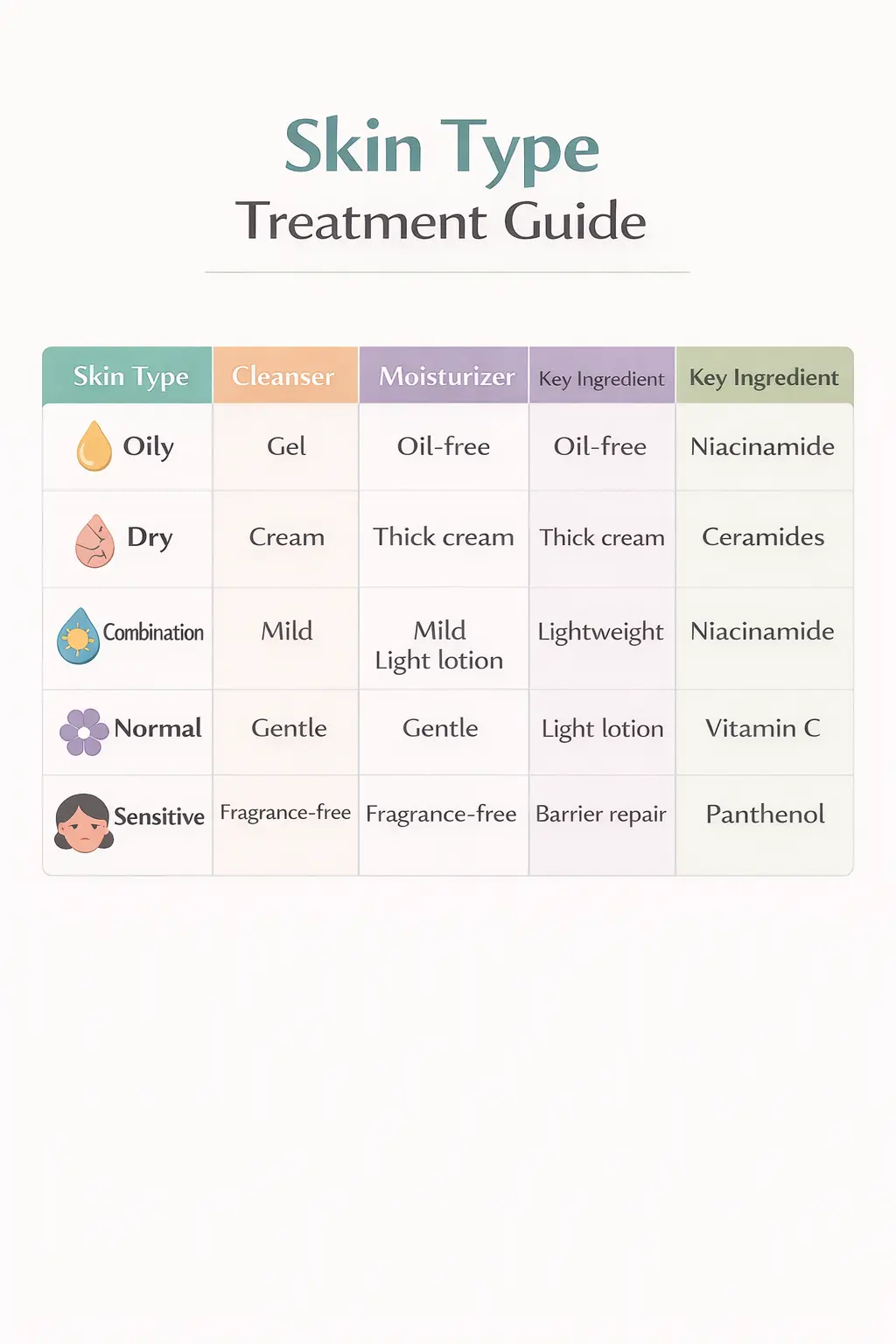
Once you identify your skin type, the next step is building a routine that supports your skin’s natural function. Using the wrong products can disrupt the skin barrier, increase irritation, or worsen oil imbalance. Choosing formulas that match your skin’s needs helps maintain stability, improve texture, and prevent long-term damage. The key is consistency, balance, and selecting ingredients that work with your skin rather than against it.
Treatment for combination skin
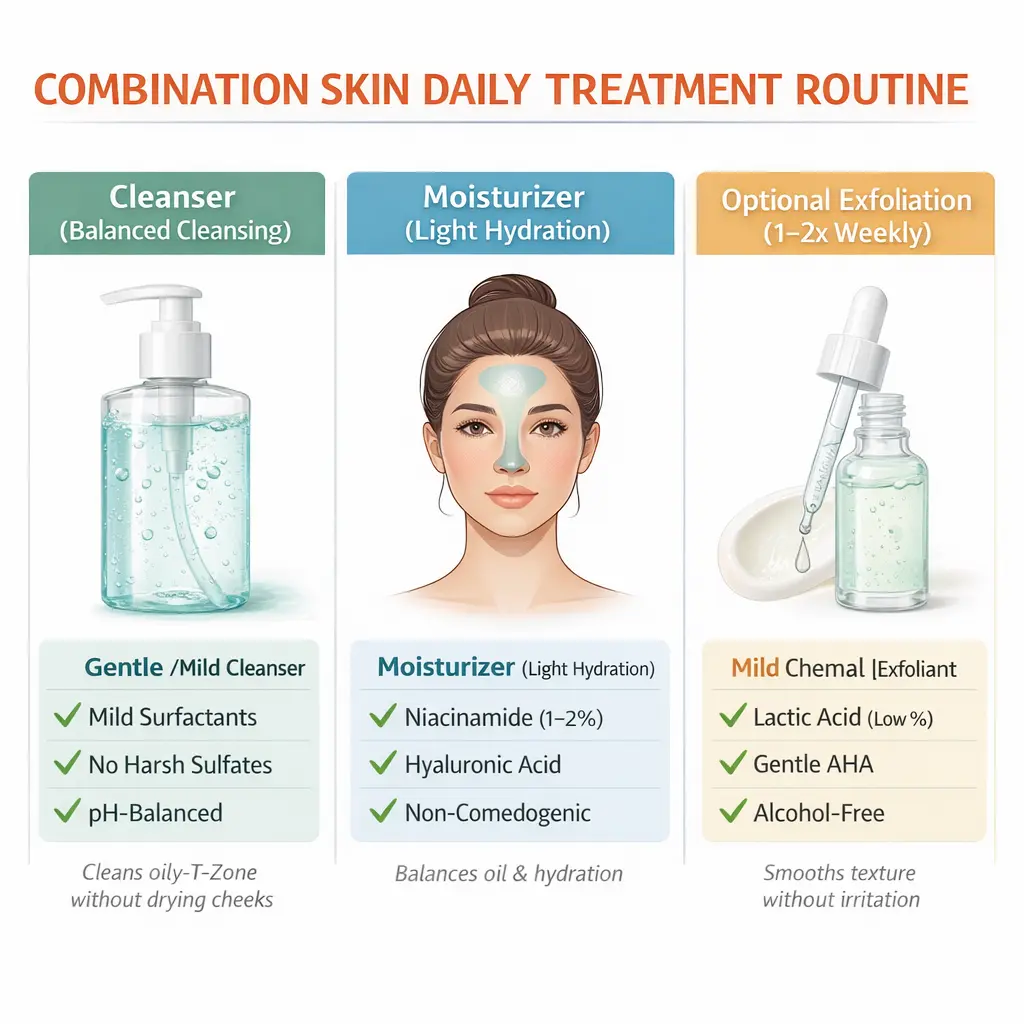
After you identify your skin type as combination, the goal is balance. This skin type has both oily and dry areas, so it does not need products that are extremely drying or overly heavy.
A gentle, mild cleanser works best for the entire face. Use a lightweight moisturizer that hydrates without feeling greasy. Niacinamide is especially beneficial because it helps control oil in the T-zone while keeping the cheeks balanced. Mild exfoliating ingredients like lactic acid can be used occasionally to maintain smooth texture without causing irritation.
Avoid thick, heavy creams on oily areas, as they can increase shine and clog pores.
Treatment for Oily Skin
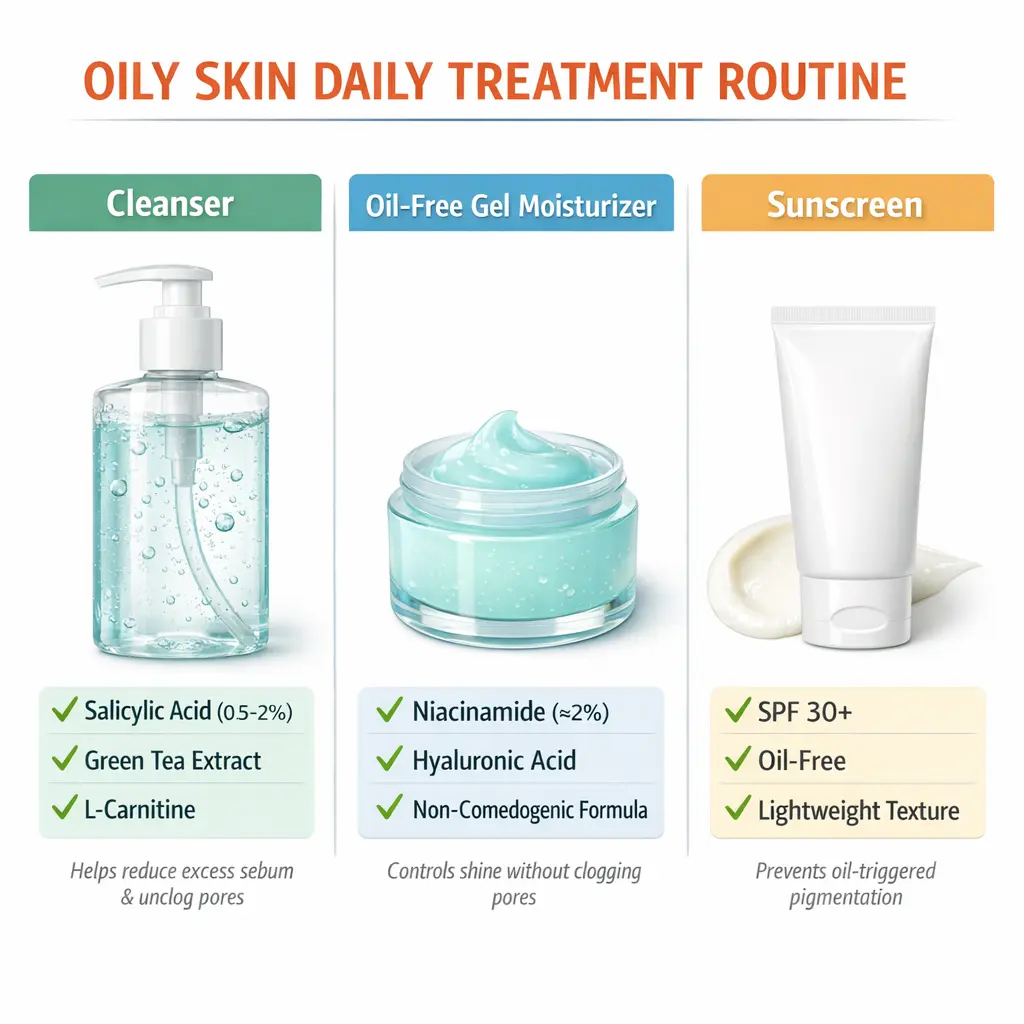
If you identify your skin type as oily, treatment should focus on reducing excess sebum while maintaining skin balance. A clinical review published in the Journal of Clinical and Aesthetic Dermatology explains that oily skin is mainly driven by sebaceous gland activity and hormones.
For topical care, ingredients with supportive evidence include niacinamide (around 2%), which has been shown to reduce sebum excretion, and green tea extract, which demonstrated oil-reducing effects in small studies. Topical retinoids may also improve pore appearance and help regulate skin turnover. L-carnitine has shown potential in lowering fatty acid content in oil glands.
In more severe cases, dermatologists may prescribe oral isotretinoin, which significantly reduces sebum production, or hormonal treatments such as spironolactone (for women).
For daily care, use a gentle gel cleanser, lightweight oil-free moisturizer, and non-comedogenic sunscreen to control shine without over-drying the skin.
Treatment for Dry Skin
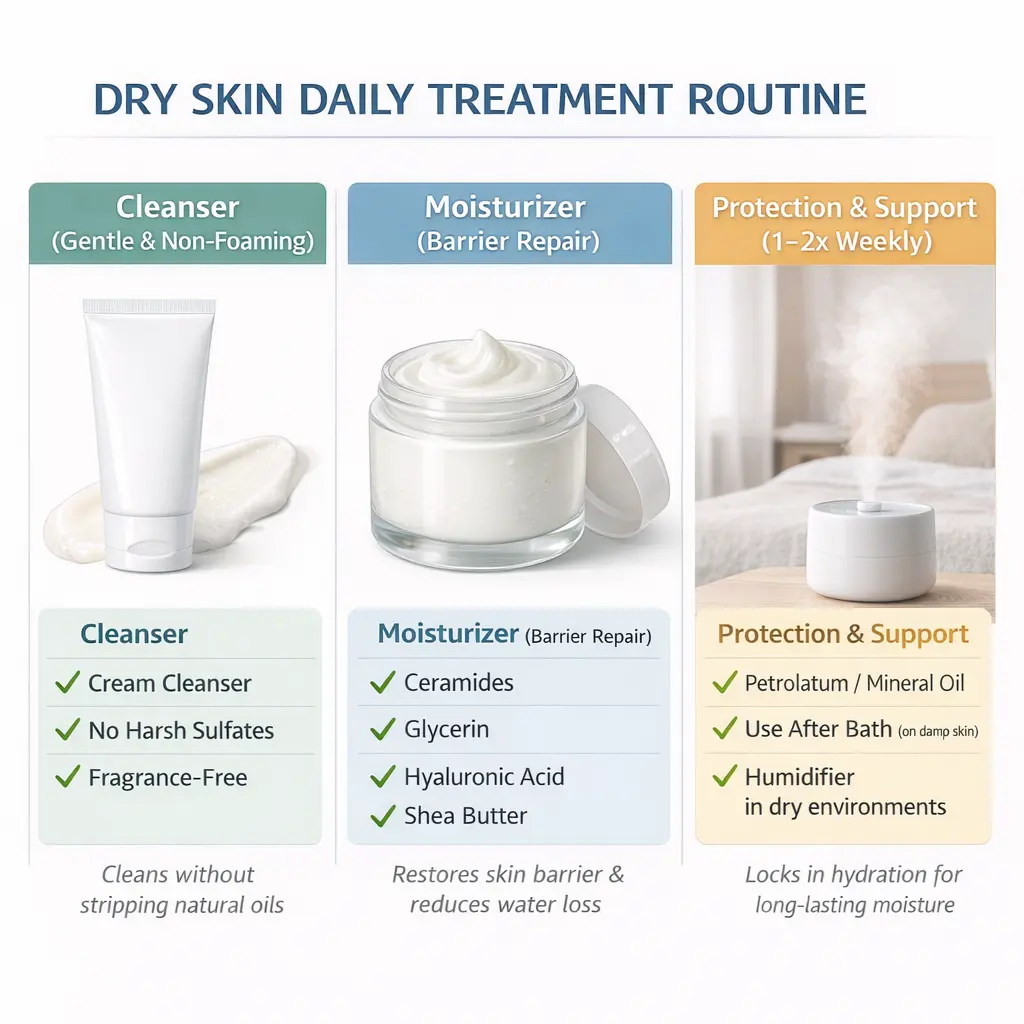
If you identify your skin type as dry, dermatologists recommend focusing on moisture retention and barrier repair rather than aggressive treatments. Dry skin is essentially a weakened skin barrier, which means the goal is to reduce water loss and protect against irritation
According to guidance from the American Academy of Dermatology, limiting showers to 5–10 minutes with warm (not hot) water can prevent further moisture loss. Immediately applying a fragrance-free cream or ointment after bathing helps lock in hydration while the skin is still slightly damp.
When choosing products, creams and ointments are generally more effective than lotions because they contain higher oil content. Ingredients such as glycerin, hyaluronic acid, ceramides, shea butter, petrolatum, and mineral oil help restore moisture and strengthen the barrier.
Dermatologists also recommend avoiding harsh soaps, alcohol-based products, and strong retinoids if your skin is excessively dry. Using a humidifier at home can further improve hydration, especially during winter or in air-conditioned environments.
If dryness continues despite proper care, it may be linked to conditions like eczema or psoriasis, and professional evaluation may be necessary.
Treatment for normal skin
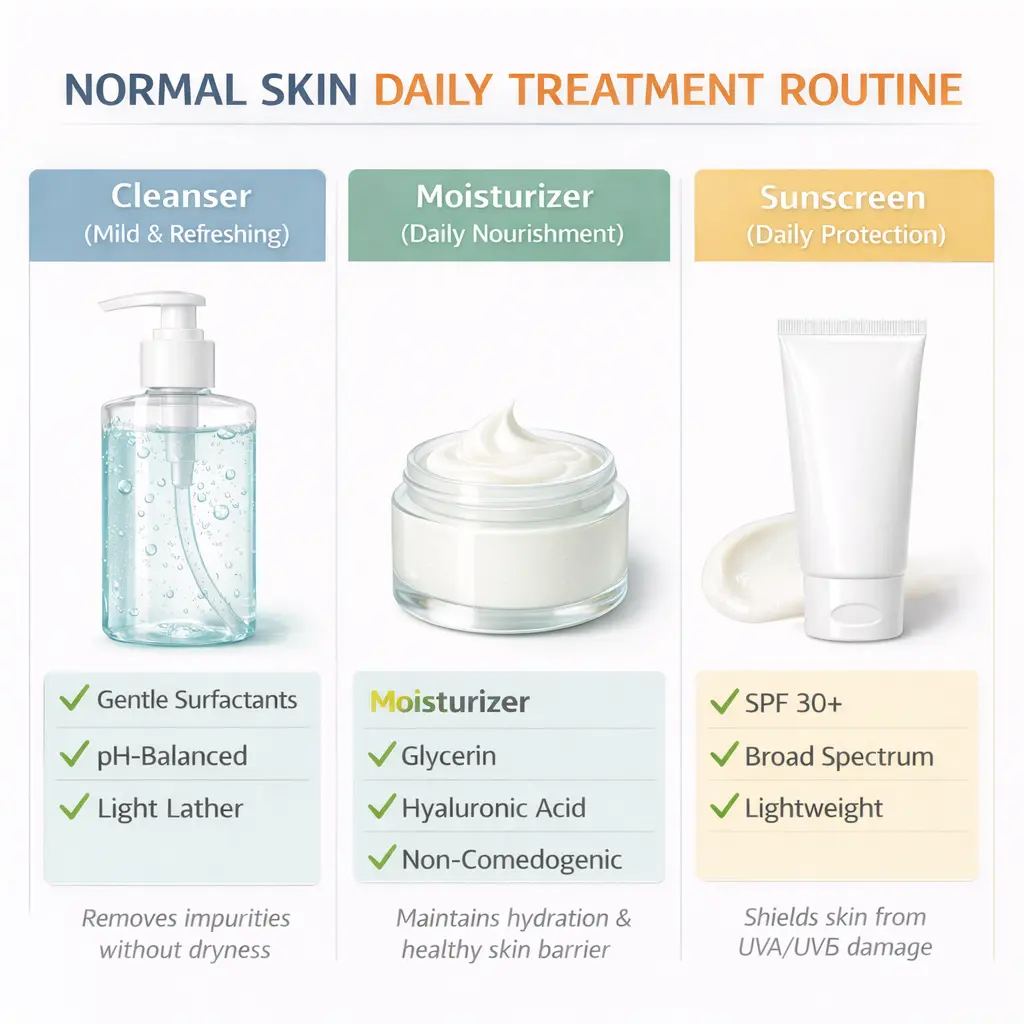
If you identify your skin type as normal, your skin is naturally balanced — not too oily and not too dry. The goal is maintenance and protection rather than correction.
A gentle cleanser, lightweight moisturizer, and daily sunscreen are usually enough to keep normal skin healthy. Ingredients like vitamin C can help maintain brightness, while peptides support long-term skin strength. Mild exfoliation once or twice a week can help maintain smooth texture without disrupting balance.
Avoid overusing strong active ingredients, as unnecessary treatments can disturb your skin’s natural stability.
Treatment for Sensitive Skin
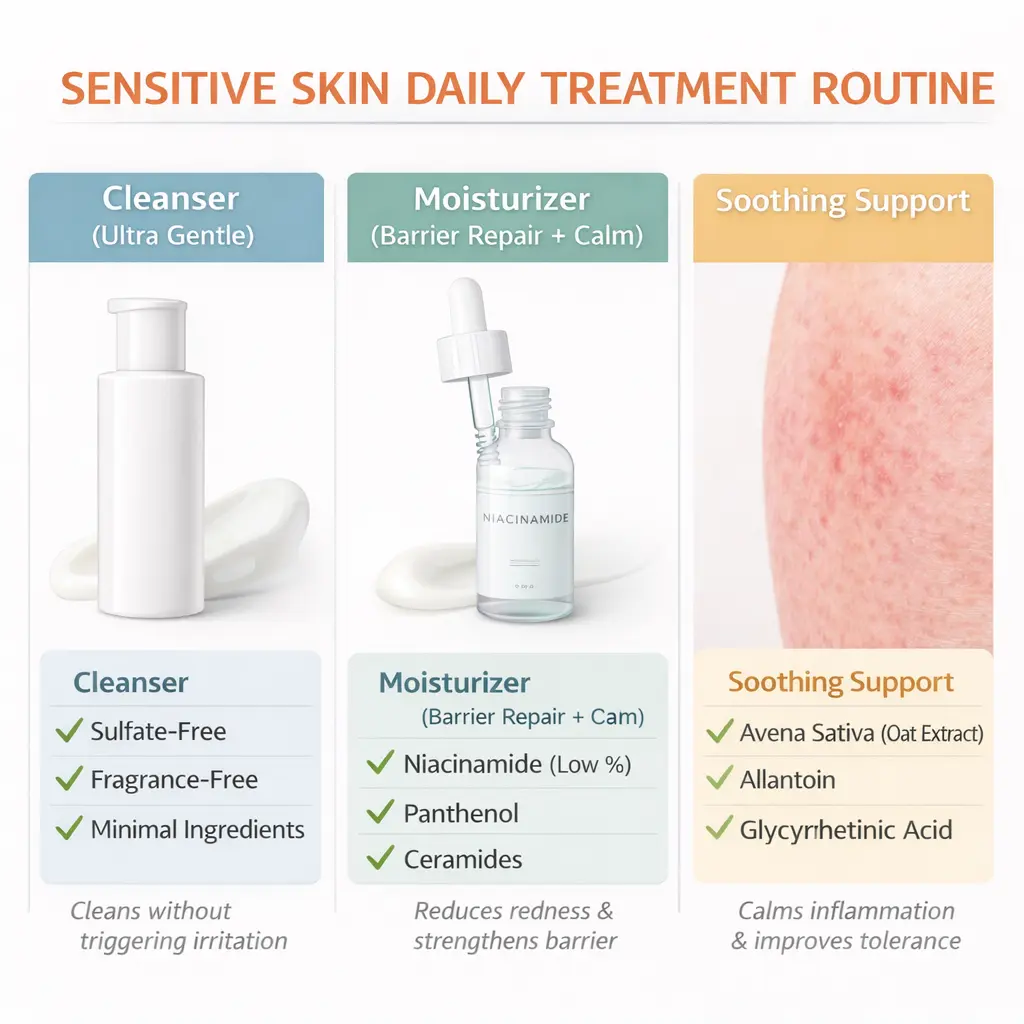
According to a 2022 analysis of pharmacy skincare products published in the International Journal of Cosmetic Science, the most commonly used and researched ingredients for sensitive skin focus on reducing inflammation and strengthening the skin barrier.
The study found that niacinamide was the most frequently used active ingredient in sensitive skin products. Niacinamide helps reduce redness, improve barrier function, and lower irritation over time.
Other commonly used soothing ingredients include Avena sativa (oat extract), which calms irritation, allantoin, which promotes skin healing, and glycyrrhetinic acid, derived from licorice root, known for its anti-inflammatory properties.
Among the ingredients studied directly on volunteers with sensitive skin, niacinamide and panthenol showed supportive evidence for improving tolerance and reducing discomfort.
This means that when you identify your skin type as sensitive, it is safer to choose products containing barrier-repairing and anti-inflammatory ingredients rather than strong exfoliating acids or fragrance-heavy formulas.
FAQ
Can skin type change over time?
Yes, skin type can change over time due to factors such as age, hormones, climate, stress, and skincare habits. For example, teenagers often experience oily skin because of hormonal activity, while skin tends to become drier with age. Seasonal changes, especially winter, can also make skin feel drier than usual. Because of these changes, it is important to reassess your skin type occasionally to ensure you are using the right products.
What is the most accurate way to identify your skin type?
The most accurate way to identify your skin type is through a professional evaluation by a dermatologist. A dermatologist can assess your skin using clinical observation, medical history, and structured classification methods to understand how your skin behaves. However, for most people, simple home tests are usually sufficient to determine their skin type and choose suitable skincare products.
Why is it important to identify your skin type before starting a skincare routine?
Identifying your skin type helps you choose the right products and avoid worsening skin problems. Using the wrong products can cause breakouts, irritation, or excessive dryness. When you know your skin type, you can build a routine that protects your skin barrier and keeps your skin healthy and balanced.
Final Thoughts: Build Your Routine with Confidence
Identifying your skin type is the foundation of effective skincare. When you understand how your skin naturally behaves — whether it produces excess oil, loses moisture easily, or reacts quickly to products — you can make informed decisions instead of guessing.
Using products that match your skin type helps maintain balance, protect your skin barrier, and prevent long-term issues like breakouts, irritation, or premature aging. While home tests are usually accurate for most people, professional evaluation can provide deeper insight if you experience persistent concerns.
Skincare does not need to be complicated. The key is consistency, choosing the right ingredients, and adjusting your routine when your skin’s needs change over time.