Introduction
Hair is more than just a physical feature — it’s closely tied to identity, confidence, and self-expression. That’s why losing it can feel unsettling, even though it’s an incredibly common experience for men.
Male pattern baldness, also known as (androgenetic alopecia), is the leading cause of hair loss in men worldwide. By the age of 50, nearly half of all men notice some degree of thinning or balding. While the condition is not harmful to physical health, it often carries a strong emotional and psychological impact. Understanding its causes, symptoms, and available treatments can help men make informed decisions, manage expectations, and reduce the stigma surrounding hair loss
Table of Contents
What is Male Pattern Baldness & Why It Happens?
“According to the National Institutes of Health, this condition affects about 50% of men by the time they reach 50 years of age.”
Male pattern baldness is the most common type of hair loss in men. It’s an incredibly widespread condition, affecting around half of all men by age 50. But why does it happen? The answer lies in a combination of your genetics and your hormones.
Every strand of hair grows from a tiny pocket in your scalp called a follicle. In men who are genetically predisposed to baldness, these follicles are more sensitive to a hormone called dihydrotestosterone (DHT), which is made from testosterone. When DHT attaches to these sensitive follicles, it slowly causes them to shrink in a process called miniaturization.
As the follicles get smaller, each new hair they produce becomes progressively thinner, shorter, and weaker, until the follicle eventually stops producing visible hair altogether.
Symptoms & Stages
Do you ever look in the mirror and notice your hairline creeping back? Or see a spot on the top of your head that seems a little thinner than it used to be? You’re not alone. This is likely male pattern hair loss, a super common type of hair loss. It’s not a disease, but a natural process for many guys.
The good news is, it usually follows a clear pattern. Let’s break down the signs and the typical stages.
The Early Signs
- A Changing Hairline: This is the most common first sign. Instead of a straight line across your forehead, your hair starts to pull back at the corners, near your temples. This creates a shape that looks a bit like an “M.”
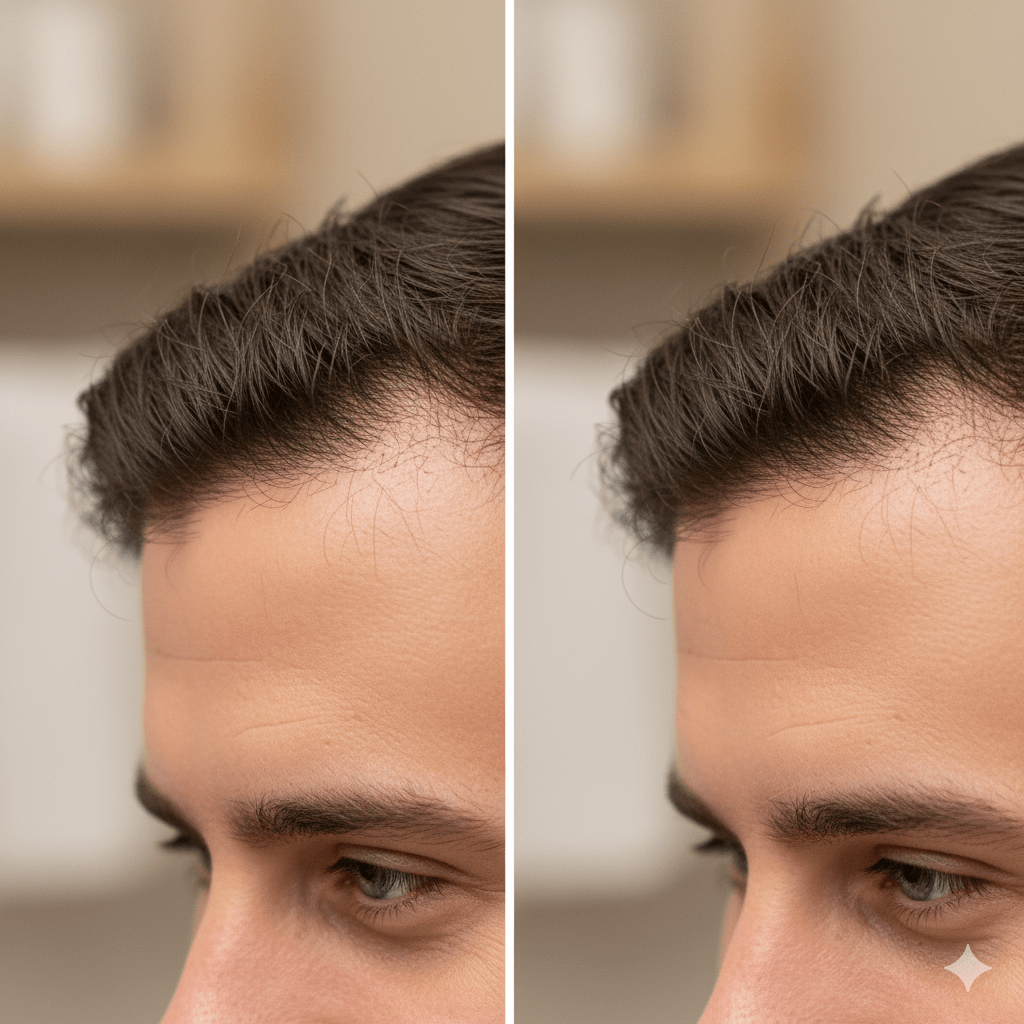
- Thinning on Top: You might also notice your hair getting thinner on the very top of your head, right where your hair parts naturally. It might feel less dense, and you might see more of your scalp when you look down.
- Shorter, Finer Hairs: The new hairs that grow in these areas are often shorter, finer, and lighter than the rest of your hair. This is a key clue that your hair follicles are getting smaller.
The Stages of Hair Loss
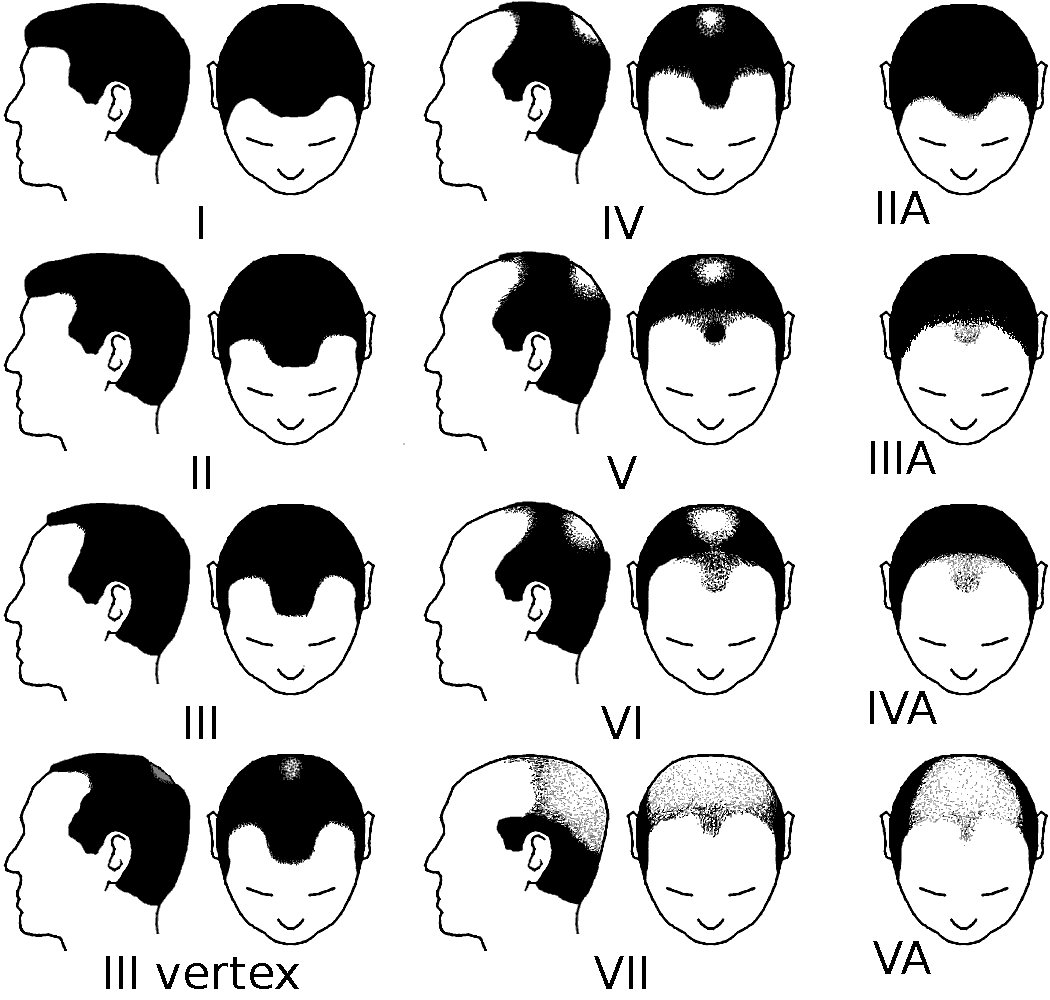
The Norwood-Hamilton scale is the standard method used by dermatologists to classify the stages of male pattern baldness (androgenetic alopecia). It helps in diagnosing the severity of hair loss and planning treatment options.
- Stage 1 & 2: Not much is happening yet. Maybe your hairline has just moved back a tiny bit, but it’s nothing to worry about.
- Stage 3: This is where you can clearly see the hair loss. Your hairline has receded significantly at the temples, forming a clear “M” or “V” shape. You might also see a small bald spot beginning to form on the very top of your head.
- Stage 4: The hair loss is more obvious now. The receding hairline is more dramatic, and the bald spot on top has gotten bigger. A band of hair still separates the front and back thinning areas.
- Stage 5 & 6: The band of hair that separated the front and back is now much thinner or completely gone. The two areas of hair loss have merged into one large bald area on top of your head.
- Stage 7: This is the most advanced stage. The top of your head is now completely bald, with hair only remaining in a horseshoe shape around the sides and back of your head.
Diagnosis & Tests
The diagnosis of male pattern baldness is usually straightforward, but doctors may use different methods to confirm it and rule out other causes of hair loss. Most men can be diagnosed with just a scalp examination, though additional tools or tests may be recommended in certain cases.
1. Medical & Family History
- Questions about when hair loss started, how fast it has progressed, and whether baldness runs in the family.
- Review of medical conditions, lifestyle, and medications that could influence hair shedding.
2. Physical Examination
- Visual inspection of the scalp for the classic recession at the temples and thinning on the crown.
- Assessment with the Hamilton-Norwood Scale, which classifies male pattern baldness from early hairline changes (Stage II) to extensive baldness (Stage VII).
- Checking for redness, scaling, scarring, or patches, which may suggest other conditions.
3. Specialized Diagnostic Tools
- Dermoscopy/Trichoscopy: Magnified scalp exam to identify miniaturized hair follicles and variation in hair diameter.
- Hair Pull Test: A gentle pull on a cluster of hairs to see how many come out, which can reveal active shedding.
- Densitometer / Trichometric Analysis: Tools that measure hair shaft thickness and follicle density to track progression.
4. Laboratory & Advanced Tests (if diagnosis is unclear)
- Blood Tests: To rule out thyroid problems, hormonal imbalance, or nutritional deficiencies such as low iron or vitamin D.
- Scalp Biopsy: A small sample taken for microscopic analysis if scarring alopecia, psoriasis, or fungal infection is suspected.
- Fungal Culture: Used when patchy hair loss may be due to a scalp infection like tinea capitis (ringworm).
- Light Microscopy: Examining hair shafts under a microscope to detect structural abnormalities.
5. When to Seek a Diagnosis
- Hair loss is sudden, patchy, or rapidly progressing.
- There are symptoms like itching, burning, redness, or pain.
- Hair loss is causing anxiety, low confidence, or distress.
- You want to begin treatment early — since many therapies are most effective in the initial stages.
Treatment Options
Male pattern baldness cannot be fully cured, but treatments can slow hair loss, preserve existing hair, and stimulate regrowth. The right option depends on how much hair is lost, progression speed, and personal preferences.
Medications and Non-Surgical Treatments
Minoxidil (Topical Solution/Foam)
- Why use it: Stimulates hair follicles, enlarges miniaturized hairs, and prolongs the growth phase.
- Best for: Individuals with active follicles who want to thicken thinning hair or maintain existing hair. Works best if started early in the hair loss process.
- Notes: Applied once or twice daily; side effects may include scalp irritation or temporary shedding.
Finasteride (Oral Tablet)
- Why use it: Blocks DHT, the hormone responsible for follicle miniaturization, slowing loss and promoting regrowth.
- Best for: Those with progressive hair loss, especially at the crown or hairline. Requires daily use and long-term commitment.
- Notes: Possible sexual side effects or, rarely, breast changes.
Combination Therapy (Minoxidil + Finasteride)
- Why use it: Combines hormonal control with follicle stimulation, providing a stronger effect than either treatment alone.
- Best for: Men who want maximum medical effect, particularly when single treatments are insufficient.
Surgical Treatments
For men with more advanced hair loss or those who do not respond to medication, surgical options offer a more permanent solution. These procedures involve moving hair follicles from a donor area (usually the back of the head, which is resistant to balding) to the thinning or bald areas.
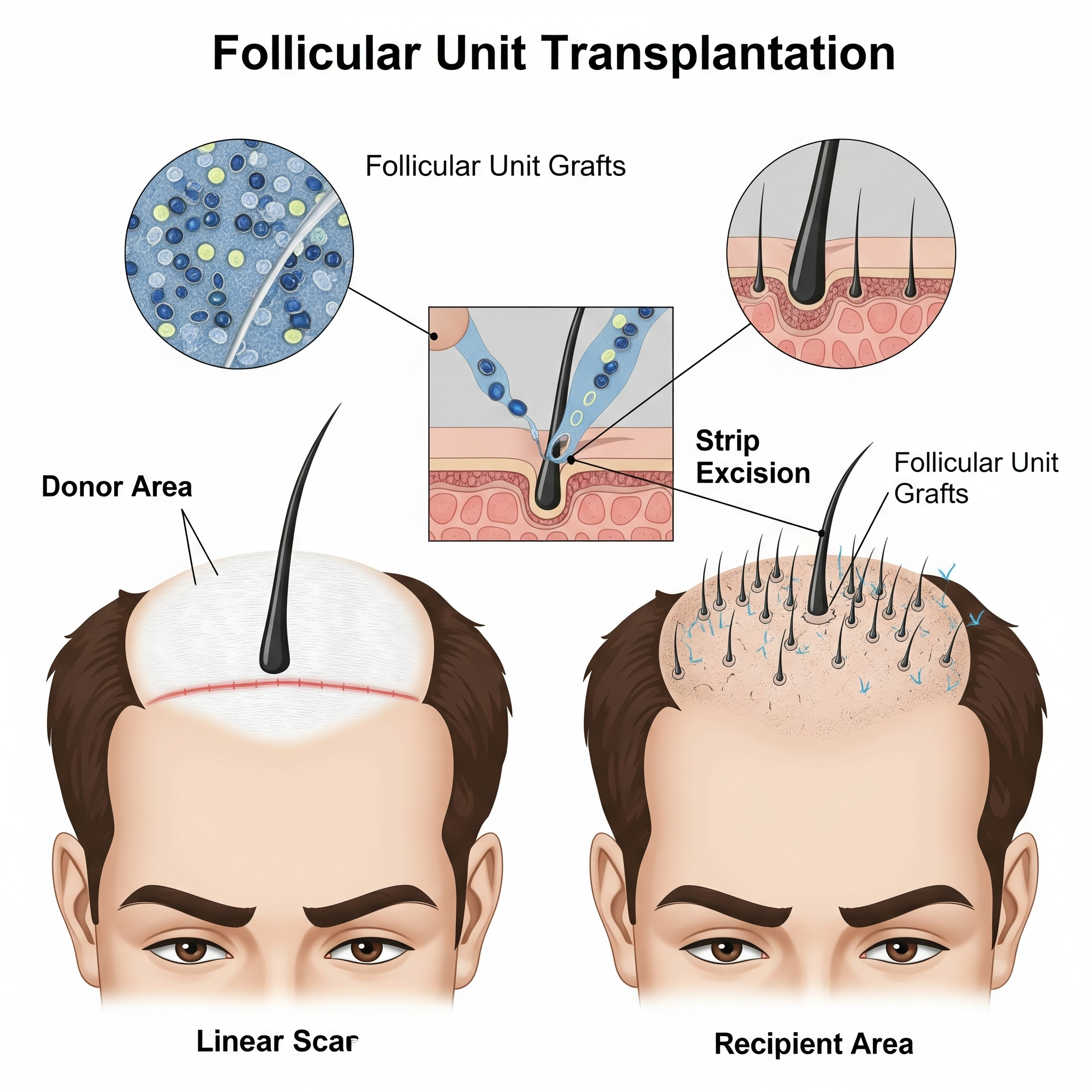
- Follicular Unit Transplantation (FUT): Often called “strip surgery,” this method involves surgically removing a strip of skin from the donor area, typically the back of the head. The follicles from the strip are then meticulously dissected and transplanted into the balding areas
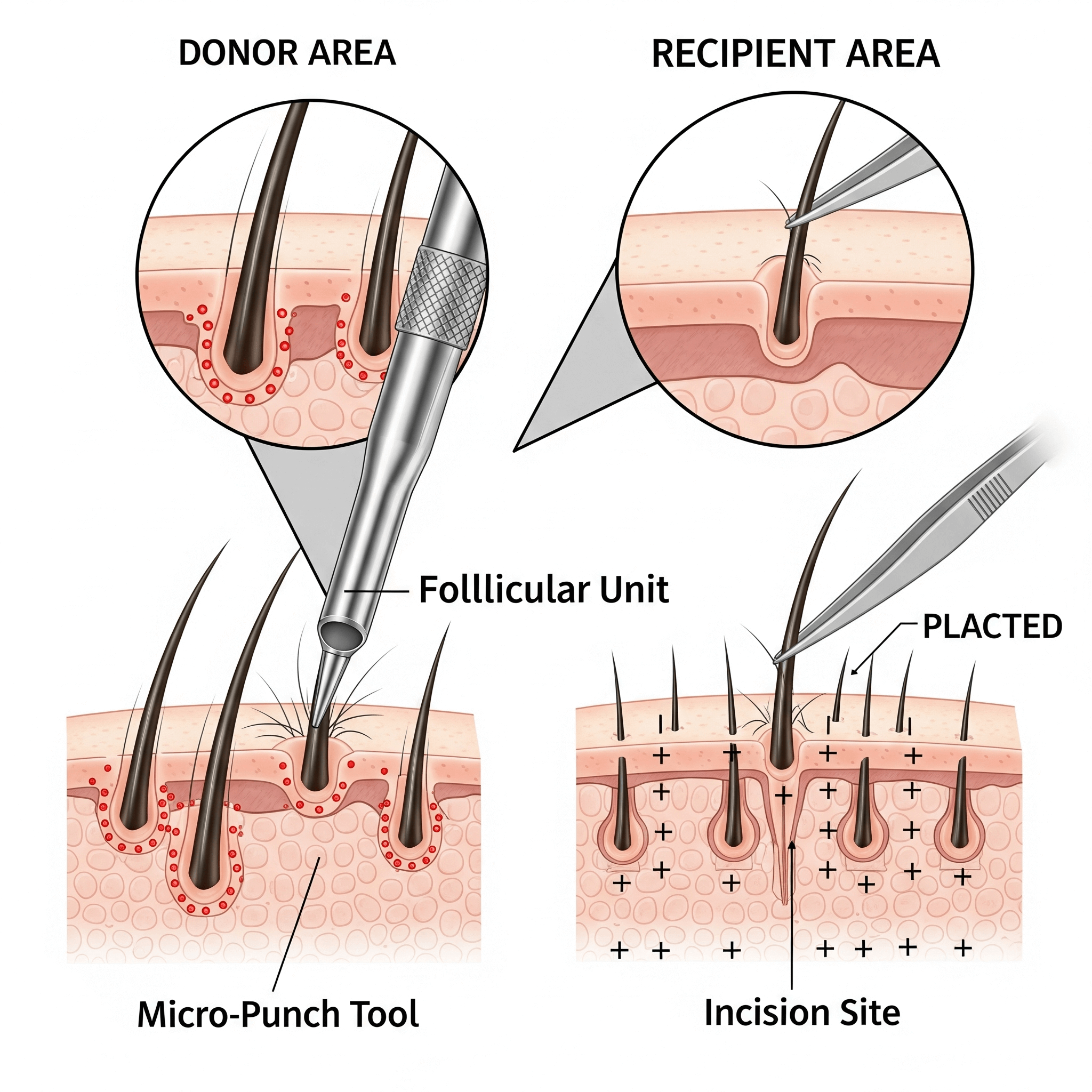
- Follicular Unit Excision (FUE): This is a more popular and modern technique where individual follicles are extracted one by one from the donor area using a small, circular punch tool. The extracted follicles are then implanted into the balding area.
According to the American Academy of Dermatology (AAD), a hair transplant is a permanent solution for hair loss, as it moves healthy hair follicles to areas with thinning hair.
Advanced and Modified Techniques
These methods are variations of the core FUE procedure, often using specialized tools or robotic technology.
- DHI (Direct Hair Implantation): This is a specific FUE method where a special implanter pen is used to place the extracted hair follicles directly into the recipient area.
- Robotic FUE: This technique uses a robotic arm to assist the surgeon, which can help increase the precision and speed of the extraction process.
Prevention & Common myths
While you can’t truly “prevent” a genetic condition like male pattern baldness, you can take steps to slow it down and manage it effectively. It’s also important to separate fact from fiction.
What You Can Do
The best approach is to be proactive. Since male pattern baldness is tied to your genetics, there’s no way to stop it completely, but you can fight back against it.
- Act Early: Treatments like Minoxidil and Finasteride are most effective when started in the early stages of hair loss. Catching it soon is your best bet.
- Live Healthy: A balanced diet rich in vitamins and minerals, regular exercise, and managing stress can help keep your hair as healthy as possible.
- Be Gentle with Your Hair: Avoid harsh chemical treatments, excessive heat styling, or very tight hairstyles that can cause extra stress on your hair follicles.
Common Myths Debunked
Many myths exist about hair loss. Here are a few to set the record straight:
- Myth: Wearing a hat causes baldness.
Fact: As long as your hat is clean and not too tight, it will not cause hair loss. Hair follicles get oxygen from the bloodstream, not from the air.
- Myth: you inherit it only from your mother’s side of the family.
Fact: The genes for hair loss can be passed down from either or both sides of your family. Looking at your father, grandfathers, and uncles on both sides can give you a more complete picture.
- Myth: Stress causes permanent baldness.
Fact: Severe stress can cause a temporary condition called telogen effluvium, where hair sheds heavily. However, this is different from male pattern baldness, and the hair usually grows back once the stress is gone.
- Myth: Shaving your head makes hair grow back thicker.
Fact: Shaving your hair only removes it at the surface. It does not affect the follicles underneath. The hair may feel thicker because the tips are blunt, but it is not actually growing back with a larger diameter.
FAQs
Is male pattern baldness a disease?
No, it is not a disease. It’s a natural, genetically determined condition. Think of it more like having a predisposition for a certain eye color or height.
Is there a cure for male pattern baldness?.
Currently, there is no permanent cure. However, treatments like Minoxidil and Finasteride can be very effective at slowing down or stopping hair loss
How long does it take to see results from treatment?
Consistency is key. It can take 3 to 6 months of regular use to start seeing noticeable results from most treatments. You must continue the treatment to maintain the benefits.
Can diet or lifestyle changes stop hair loss?
While a healthy diet and lifestyle are good for your hair’s overall health, they cannot stop hair loss caused by genetics and hormones. They can help keep your remaining hair as healthy as possible, but they are not a replacement for medical treatment
When should I see a doctor about hair loss?
It’s best to see a doctor or dermatologist as soon as you notice early signs of hair loss. Starting treatment early is much more effective than trying to reverse it after significant hair loss has already occurred.
Conclusion
In the end, male pattern baldness is a journey for many men, but it doesn’t have to be a journey you take alone. By understanding the science and recognizing the signs, you are already taking a powerful first step. Effective treatments are available, and the key to success is to act early. Don’t wait — take control of your hair health by consulting with a professional today. Early action can preserve your hair, your confidence, and your peace of mind.
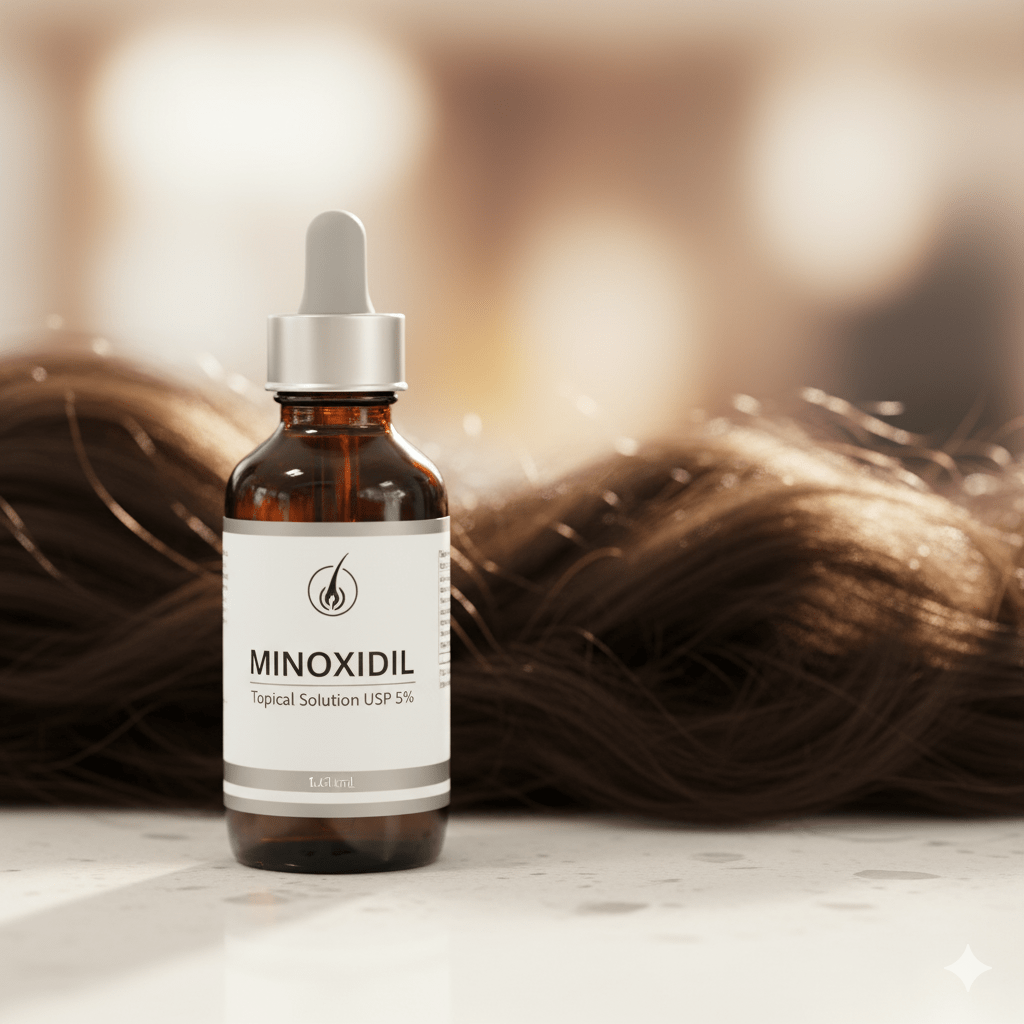
Minoxidil for Male Pattern Baldness
Curious how Minoxidil works to slow hair loss and support regrowth?
Norwood Scale: Stages of Hair Loss
Wondering which stage of hair loss you’re in? The Norwood Scale helps you track changes and plan treatment early.

Finasteride for Hair Loss: Benefits, Results & Safety Explained
Learn how Finasteride helps prevent DHT-related hair loss and what to know before starting treatment.

Post-Finasteride Syndrome (PFS): Causes & Recovery Guide
Explore the rare but persistent side effects that can occur after stopping Finasteride, and how recovery works.