Capsicum benefits are often searched by people who want to improve their diet without adding extra calories or complicated foods. If you’re wondering whether capsicum is actually healthy, how it affects your body, or if you should include it in your daily meals, this guide will give you clear answers. You’ll learn about its nutrition, real health benefits, and the best ways to use capsicum in everyday Indian cooking.
Table of Contents
What Is Capsicum?
Capsicum is a colorful vegetable commonly used in salads, stir-fries, curries, sandwiches, and many healthy recipes. It belongs to the nightshade family and is known for its crisp texture, mild sweetness, and high nutritional value. Capsicum is naturally low in calories while providing important nutrients like vitamin C, vitamin A, antioxidants, and fiber.
It is widely eaten around the world and comes in different colors, including green, red, yellow, and orange. Each variety has a slightly different taste and nutrition profile, making capsicum a versatile addition to a balanced diet.
Is Bell Pepper the Same as Capsicum?
Yes, bell pepper and capsicum are the same vegetable. The name “capsicum” is more commonly used in countries like India, Australia, and New Zealand, while “bell pepper” is widely used in the United States and Canada.
Unlike spicy chili peppers, bell peppers are usually sweet and mild because they contain very little capsaicin, the compound responsible for heat in peppers.
Capsicum Nutrition Facts
A quick look at the nutrition value of raw capsicum, based on USDA FoodData Central, shown in a simple format for easy comparison.
Per 100 g
Per Serving
Example: 1 medium capsicum (about 119 g)
Types and Colors of Capsicum
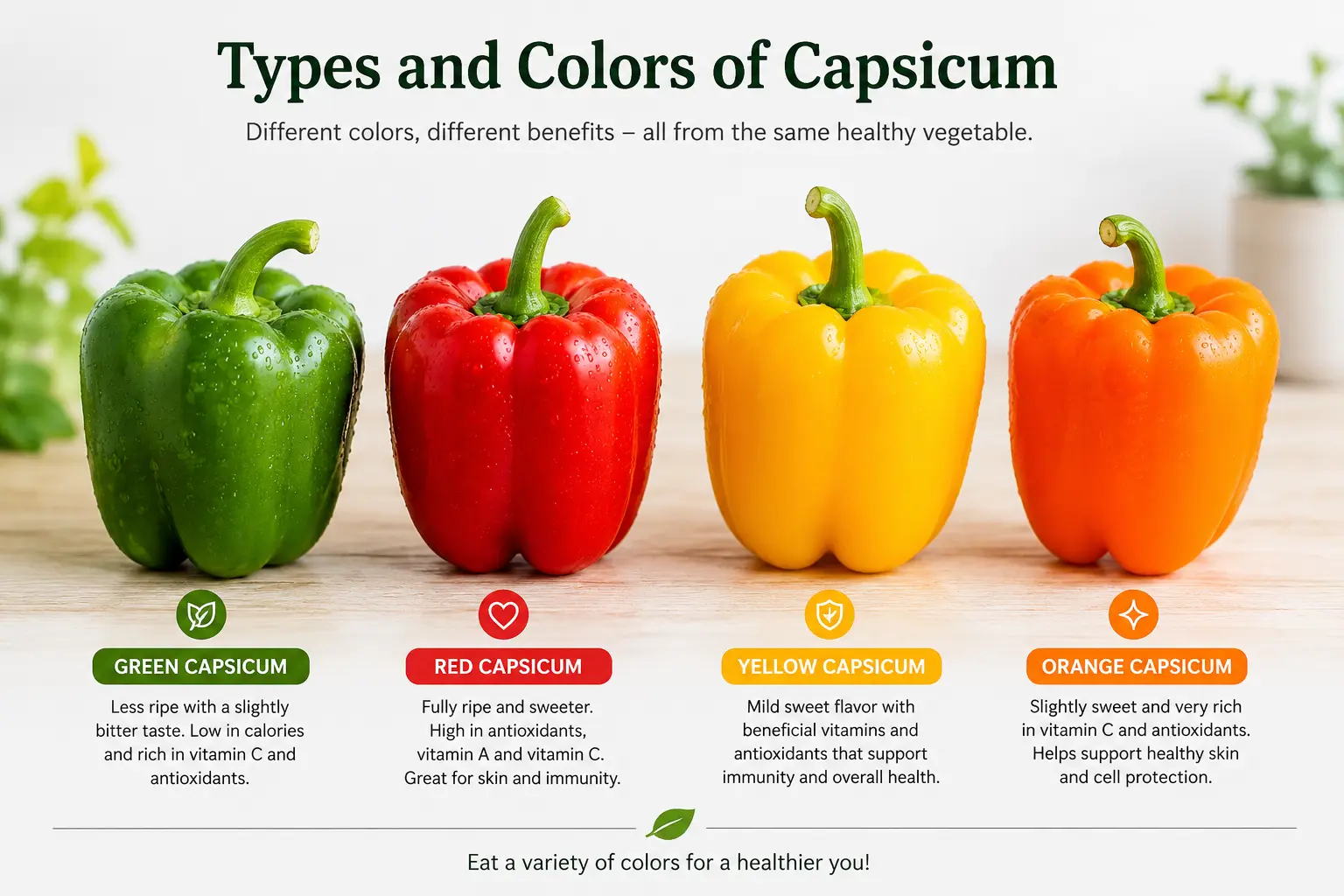
- Green capsicum is less ripe and has a slightly bitter taste.
- Red capsicum is fully ripe, sweeter, and usually higher in antioxidants and vitamin C.
- Yellow and orange capsicum have a mild sweet flavor and contain beneficial vitamins and plant compounds.
Different colored capsicums can provide different antioxidants and nutrients, so eating a variety may help support overall health.
Capsicum Nutrition by Colour (Per 100g)
| Colour | Calories | Carbs | Vit C |
|---|---|---|---|
| Green | 20–23 kcal | 4.78 g | 99.5 mg |
| Red | 27–31 kcal | 6.65 g | 142 mg |
| Yellow | 27–31 kcal | 6.60 g | 139 mg |
| Orange | 27–32 kcal | 6.70 g | 158 mg |
Green capsicum is usually the lowest in calories, while orange capsicum is very rich in vitamin C.
Source: USDA FoodData Central
Do Different Colors of Capsicum Provide the Same Benefits?
Different colors of capsicum come from the same plant, but their nutrient and antioxidant levels can change as they ripen. Each color has its own taste, plant compounds, and potential health benefits. According to research published in the National Library of Medicine, peppers may develop different levels of antioxidants and vitamins during the ripening process.
Green Capsicum Benefits
Green capsicum is harvested earlier before it becomes fully ripe. It has a slightly bitter flavor and is usually lower in calories and carbohydrates compared to other colors.
It contains fiber, vitamin C, and antioxidants that may support digestion, immunity, and overall health. Because it is lower in calories, green capsicum is often included in weight-loss-friendly meals and healthy diets.
Red Capsicum Benefits
Red capsicum is fully ripe and naturally sweeter than green capsicum. It is usually higher in antioxidants, vitamin A, and vitamin C.
The antioxidants in red capsicum may help support skin health, immunity, and eye health. Its higher vitamin C content may also help support collagen production and iron absorption.
Yellow Capsicum Benefits
Yellow capsicum has a mild sweet flavor and contains beneficial vitamins and plant compounds. It provides antioxidants and vitamin C that may help support immune function and overall wellness.
Its bright color comes from natural carotenoids, which are plant pigments linked to antioxidant benefits.
Orange Capsicum Benefits
Orange capsicum is slightly sweet and rich in vitamin C and antioxidants. It may help support healthy skin, immunity, and cell protection from oxidative stress.
Orange capsicum is also colorful and versatile, making it a healthy addition to salads, sandwiches, and cooked dishes.
Is Capsicum Good for Weight Loss?
Capsicum is often included in weight-loss-friendly diets because it is naturally low in calories while still adding flavor, texture, and volume to meals. It also contains fiber, which may help you feel fuller for longer and support balanced eating habits.
Green capsicum is usually the lowest in calories, while red, yellow, and orange capsicums contain slightly more natural sugars and antioxidants. Adding capsicum to salads, stir-fries, wraps, soups, and healthy Indian dishes may help make meals more satisfying without adding excessive calories.
Why Capsicum May Support Weight Loss
Capsicum can fit well into a balanced diet because it provides nutrients and fiber without being calorie-dense. Many people use it to add more vegetables to meals while reducing heavily processed ingredients.
Best Ways to Eat Capsicum for Weight Loss
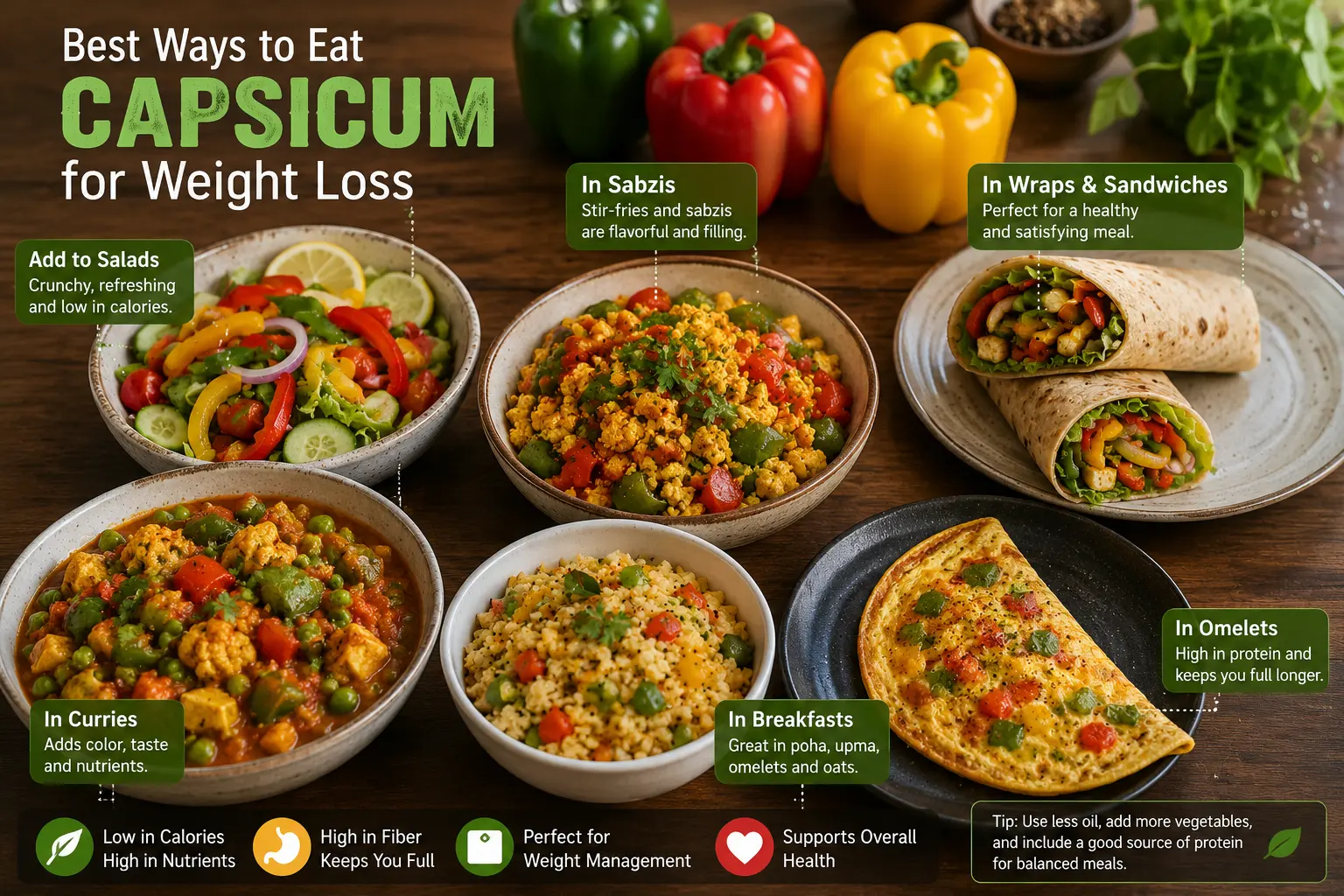
Capsicum can be enjoyed raw in salads and sandwiches or cooked in stir-fries, curries, and omelets. Pairing it with protein-rich foods and other vegetables may help create more filling and balanced meals.
Capsicum Benefits for Digestion and Gut Health
Capsicum contains fiber and water, which may help support healthy digestion and regular bowel movements. Including vegetables like capsicum in a balanced diet may also support overall gut health and daily digestive comfort.
Raw capsicum provides a crisp texture and natural fiber, while cooked capsicum becomes softer and easier to digest for some people.
How Capsicum Supports Digestion
The fiber found in capsicum may help support regular bowel movements and overall digestive health. Eating a variety of vegetables can also help support a more balanced and nutrient-rich diet.
Raw vs Cooked Capsicum
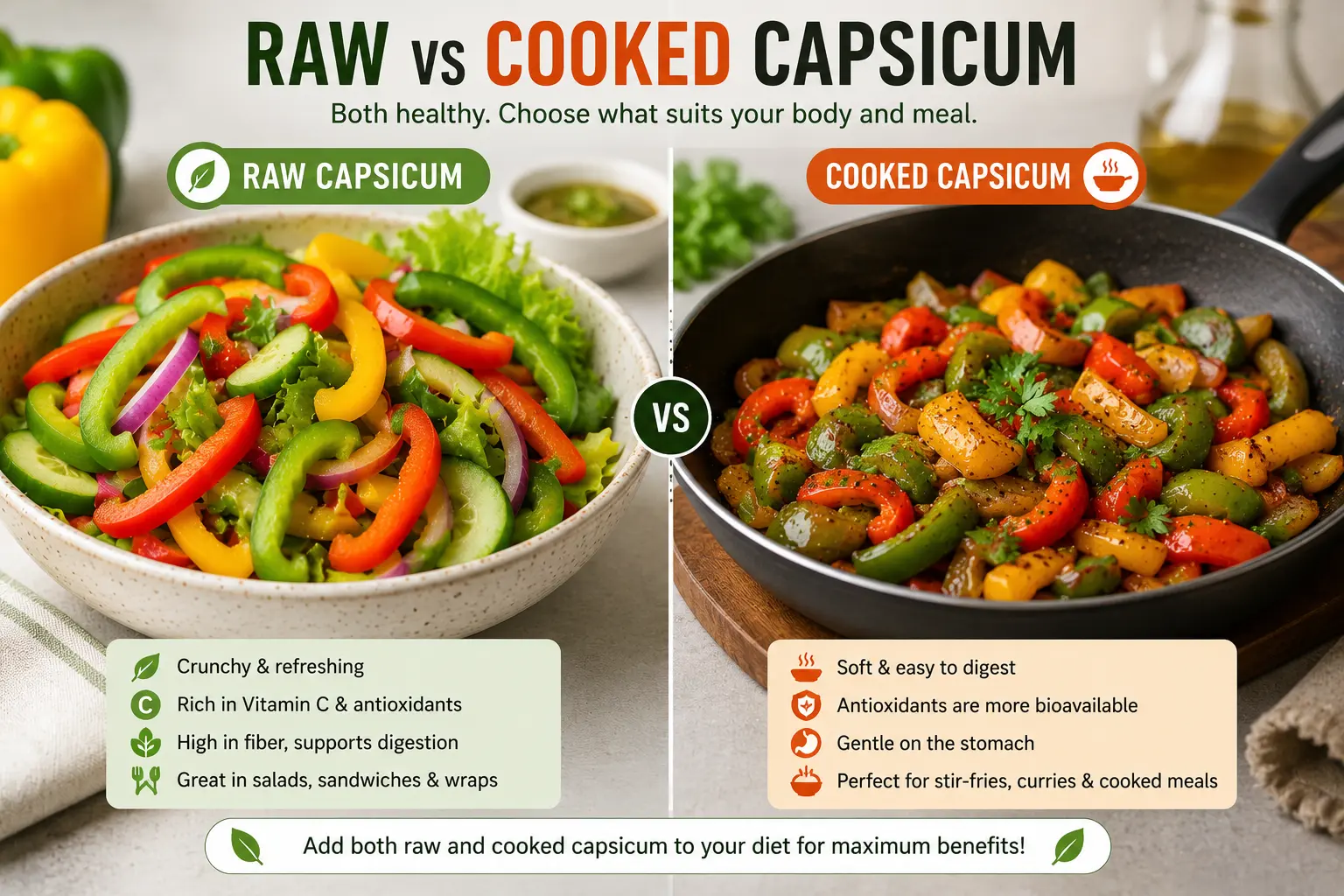
Raw capsicum keeps more of its natural crunch and vitamin C content, while cooked capsicum develops a softer texture and slightly sweeter flavor. Both forms can be healthy depending on personal preference and digestion.
Is Capsicum Anti-Inflammatory?
Capsicum contains antioxidants and plant compounds that may help support the body’s natural response to oxidative stress and inflammation. Red, yellow, and orange capsicums are especially rich in carotenoids and vitamin C, which are known for their antioxidant properties.
Eating colorful vegetables regularly may help support overall wellness as part of a balanced lifestyle and healthy diet.
Nutrients Linked to Anti-Inflammatory Benefits
Capsicum contains vitamin C, carotenoids, and other antioxidants that may help protect cells from oxidative stress. While capsicum is nutritious, it should be viewed as part of an overall healthy diet rather than a treatment for inflammation-related conditions.
Capsicum Benefits for Skin and Hair
Capsicum contains vitamin C, antioxidants, and plant compounds that may help support healthy skin and hair. Vitamin C plays an important role in collagen production, which helps support normal skin structure and overall skin wellness.
The antioxidants found in colorful capsicums may also help protect cells from oxidative stress. Red and orange capsicums are especially rich in antioxidants and vitamin C, which are commonly linked to skin and hair health. Including capsicum as part of a balanced diet with enough protein, healthy fats, and other vegetables may help support healthy-looking skin and overall hair wellness.
Is capsicum healthy to eat every day?
Capsicum is generally considered a healthy vegetable that can be included in a balanced daily diet. It is low in calories and provides nutrients like vitamin C, antioxidants, and fiber.
Which color of capsicum is the healthiest?
All colors of capsicum provide beneficial nutrients, but red capsicum is usually richer in antioxidants and vitamin C because it is fully ripe. Green capsicum is typically lower in calories.
Can capsicum help support skin health?
Capsicum contains vitamin C and antioxidants that may help support collagen production and overall skin wellness as part of a balanced diet.
Final Thoughts
Capsicum is a colorful, low-calorie vegetable that can fit easily into many healthy diets. Whether eaten raw or cooked, it provides vitamin C, antioxidants, fiber, and plant compounds that may support overall wellness. Including different colors of capsicum in balanced meals may help support digestion, immunity, skin health, and healthy eating habits.