Peanut butter is often seen as both a healthy superfood and a fattening spread, which leaves many people confused. The truth is, peanut butter can be very healthy when eaten in the right quantity and chosen in its natural form. It provides healthy fats, plant-based protein, and long-lasting energy, but because it is calorie-dense, portion control is essential. In this article, we break down peanut butter’s nutrition, the difference between natural and regular varieties, the best time to eat it, who should avoid it, and how to use it for weight loss or weight gain.
Table of Contents
Peanut Butter Nutrition & Calories (Per Tablespoon)
This spread is calorie-dense, so nutrition is best understood in realistic serving sizes, not per 100 g. Most people consume 1 tablespoon at a time, making it the most practical reference.
Nutrition Per 1 Tablespoon (≈16 g)
- Calories: ~95 kcal
- Protein: ~3.5 g
- Fat: ~8 g
- Saturated Fat: ~1.5 g
- Carbohydrates: ~3.5 g
- Sugar: ~1 g
- Fiber: ~1 g
- Magnesium: ~25 mg
(Values may vary slightly depending on ingredients and processing)
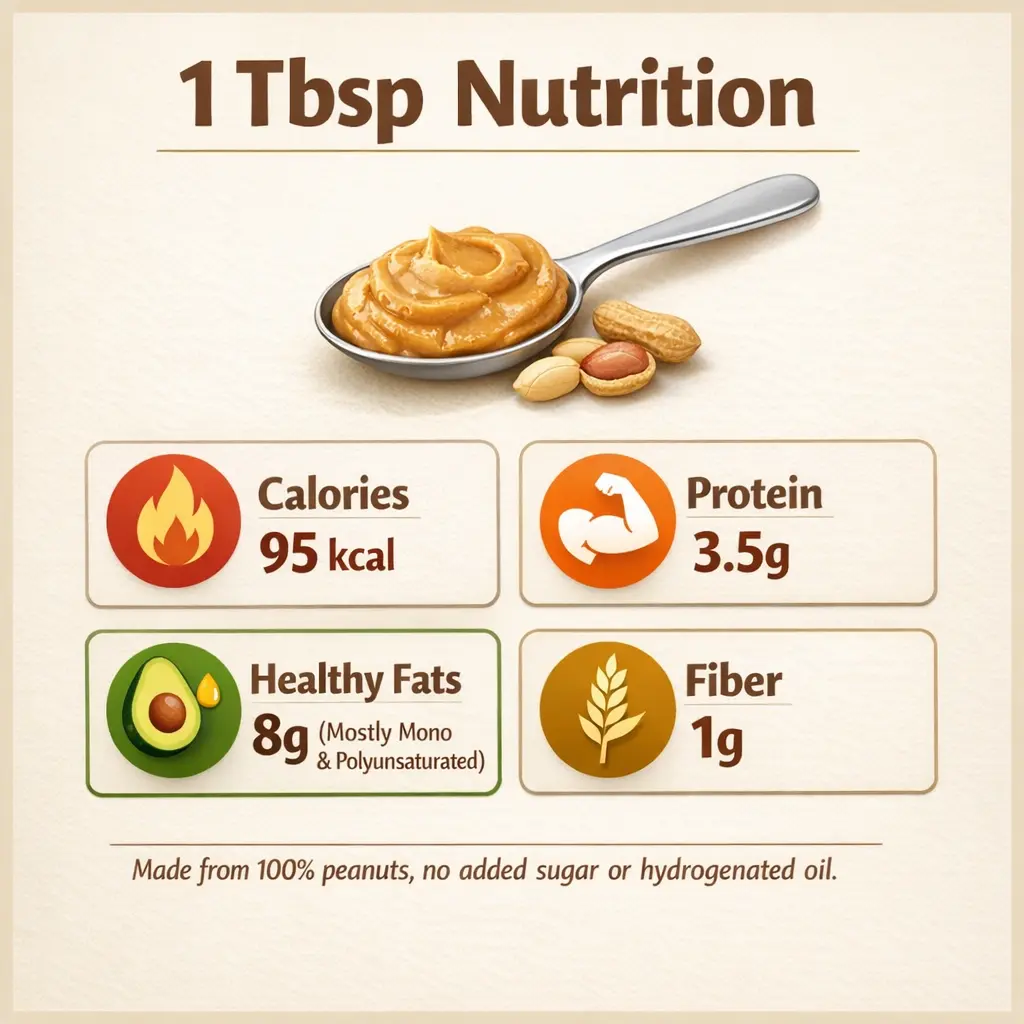
What this means for your diet
It provides quick energy and healthy fats in a small portion. While it contains protein, it should support your diet, not replace main protein sources like dal, milk, curd, or tofu.
Natural vs Regular Peanut Butter: Which Is Healthier?
The main difference between natural and regular versions is not peanut— it’s the added ingredients.
Natural – Why it’s healthier
Contains:
- Peanuts only (sometimes salt)
Why it’s healthier
- No added sugar
- No hydrogenated or refined oils
- Less processing
- Closer to whole peanuts
This makes the natural version better for heart health, digestion, and blood sugar control.
Regular – Concerns
Contains:
- Added sugar
- Extra salt
- Stabilizers or refined oils
Concerns
- Higher sugar intake
- Less nutritional purity
- Can promote fat gain if overused
Final verdict: The natural variety is the healthier choice for daily use, especially if your goal is clean eating, weight management, or muscle gain without excess fat.
Label tip: Choose peanut butter with ingredients listed as“Peanuts” or “Peanuts + salt” only.
Best Time and Right Quantity to Eat Peanut Butter for Health
This spread can be a powerful addition to your diet, but its benefits depend mainly on portion size and timing. The ideal amount for most people is 1 tablespoon per day, or up to 2 tablespoons if you are physically active or trying to gain healthy weight. Since it is calorie-dense, even small servings deliver plenty of energy and healthy fats, making moderation more important than large portions.
The best time to consume it is in the morning with breakfast or as a mid-morning or afternoon snack. Eating it earlier in the day helps your body use the calories for energy instead of storing them as fat. Pairing it with whole foods like brown bread, oats, fruits, or milk improves digestion and keeps you full for longer. It also works well as a pre-workout snack, providing steady energy without a sudden sugar spike.
Late-night intake or overeating can have drawbacks, especially for people with low activity levels. Because it digests slowly and contains healthy fats, excess amounts may cause bloating, discomfort, or unwanted fat gain. Sticking to the right quantity at the right time supports energy levels, muscle recovery, and overall nutrition without adding unnecessary calories.
How to Eat Peanut Butter Properly for Better Digestion
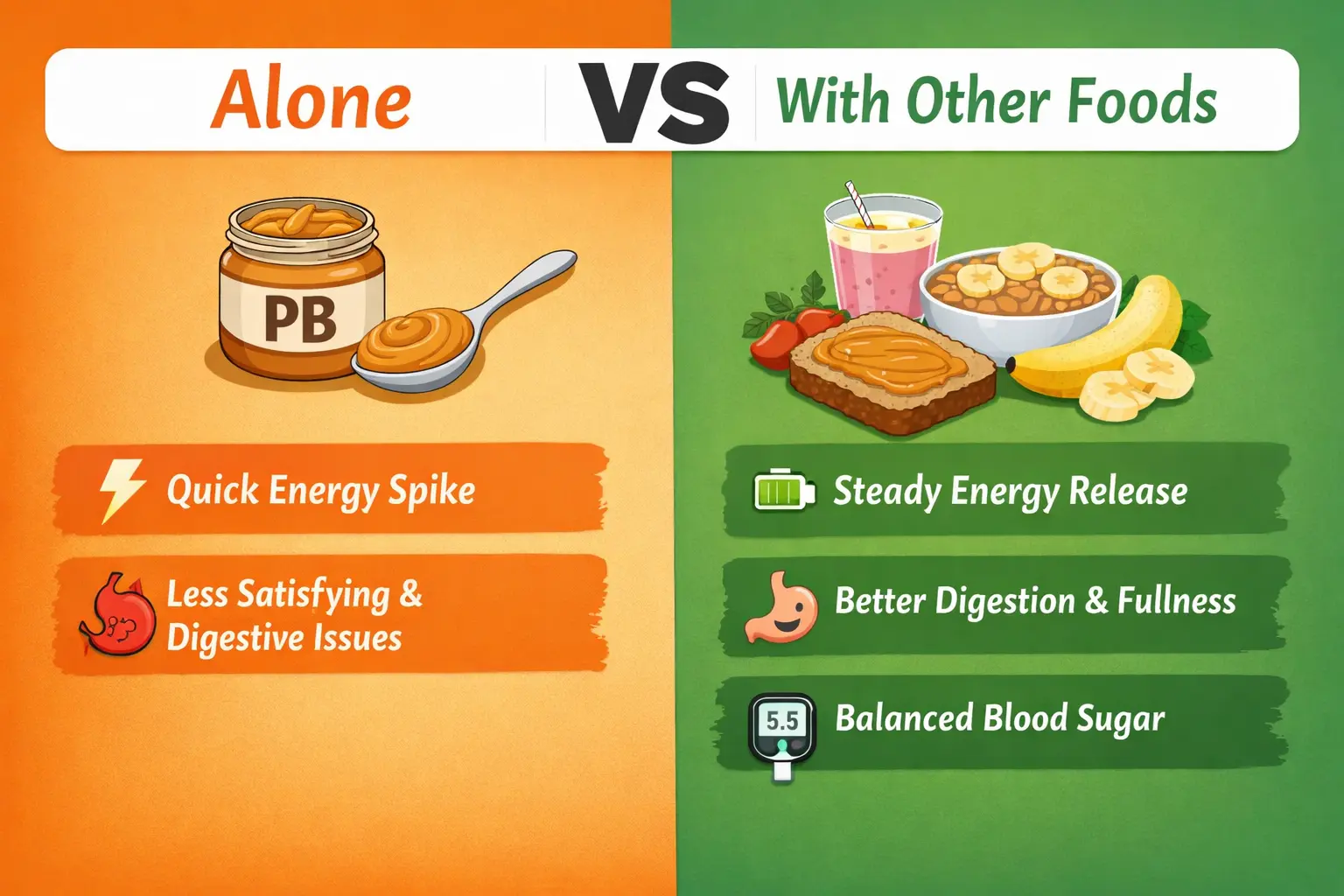
Eating it the right way matters just as much as choosing a good-quality product. Instead of consuming it alone, pair it with fiber- and carb-rich foods like oats, bananas, whole-grain bread, or smoothies. This combination slows digestion, improves nutrient absorption, and provides steady energy rather than a sudden calorie load.
Adding it to a smoothie with oats and fruit or spreading a small amount on whole-grain toast helps keep you full longer and supports stable blood sugar levels. This approach is especially useful for people focused on healthy weight management, digestion, and sustained energy throughout the day.
Whole Peanuts vs Peanut Butter: Which Gives Better Nutrition?
Whole peanuts and peanut butter both offer protein, healthy fats, and essential nutrients, but the way they are consumed can affect how your body uses them. Whole peanuts contain more fiber, which slows digestion, helps control blood sugar, and keeps you feeling full longer. This makes them slightly better for appetite control and gut health.
The buttered form, on the other hand, is more concentrated. While it provides almost the same amount of protein and healthy fats per serving, it often has less fiber, especially in regular commercial versions with added sugar or oils. Natural peanut butter preserves most of the nutrients found in whole peanuts, making it a convenient, nutrient-dense alternative.
In short, both can be part of a healthy diet, but whole peanuts have a slight edge in fiber and digestion. If convenience and portion control matter, natural peanut butter is a great choice, just be mindful of added ingredients in commercial spreads.
Peanut Allergy: Important Safety Information
Peanut allergy is a serious immune condition in which the body mistakenly identifies peanut proteins as harmful. In affected individuals, exposure can trigger symptoms such as itching, skin rashes, digestive discomfort, swelling of the lips or throat, breathing difficulty, or, in severe cases, life-threatening anaphylaxis. Unlike mild food intolerances, this condition usually requires complete avoidance, as even trace amounts may cause a reaction.
Since this spread is made from concentrated peanuts, it is unsafe for anyone with a diagnosed allergy, whether the product is natural or commercially processed. People who notice symptoms after consuming peanuts should consult a healthcare professional and choose safer alternatives such as almond butter, sunflower seed butter, or soy-based spreads.
What research shows: A clinical review published in the Canadian Medical Association Journal and available through the U.S. National Library of Medicine (NCBI) reports that peanut allergy accounts for the majority of severe food-related allergic reactions. The study notes that peanut allergy often begins early in life, is less likely to be outgrown, and that trace amounts of peanuts can cause reactions in highly sensitive individuals.
If you suspect a food allergy, consult a qualified healthcare professional before making dietary changes.
Source: CMAJ (2003), NCBI – PMCID: PMC154188
How to Use Peanut Butter for Weight Loss vs. Weight Gain
Because this spread is high in both protein and calories, it is a “double-edged sword.” Depending on how you eat it, it can help you drop pounds or bulk up.
For Weight Loss (Portion Control is Key)
If your goal is to lose weight, it can actually help by keeping you full for longer. Its combination of fiber and protein suppresses hunger.
- The Secret: Stick to exactly 1 tablespoon per day.
- How to eat it: Pair it with high-fiber foods like apple slices or celery. This creates a filling snack that prevents you from overeating later.
For Weight Gain (The Calorie Booster)
For those looking to build muscle or gain weight, peanut butter is one of the most efficient “clean” foods. It allows you to add significant calories without feeling overly stuffed.
- The Secret: Increase intake to 2–3 tablespoons per day.
- How to eat it: Add it to protein shakes, oatmeal, or smoothies. Adding two tablespoons of peanut butter to a smoothie instantly adds nearly 200 high-quality calories.
FAQs About Peanut Butter
Is peanut butter healthy for daily consumption?
Yes, peanut butter is healthy for daily consumption when eaten in moderation. Consuming 1–2 tablespoons per day, especially natural peanut butter made from just peanuts (and salt), provides protein, healthy fats, fiber, vitamins, and minerals without harming health.
Is peanut butter good for weight loss or weight gain?
Peanut butter can support both weight loss and weight gain, depending on portion size. Small servings help control hunger due to protein and fiber, aiding weight loss. Larger portions increase calorie intake, making it useful for healthy weight gain.
What is the difference between natural and regular peanut butter?
Natural peanut butter contains only peanuts (and sometimes salt), while regular peanut butter often includes added sugar, refined oils, and preservatives. Natural peanut butter is less processed, better for heart health, and a healthier choice for daily use.
The Bottom Line: Is Peanut Butter Actually Healthy?
Yes, peanut butter is definitely healthy—but with two conditions. To get the most benefits without the side effects, you should:
- 1. Choose Natural: Stick to brands that contain only peanuts and a little salt. Avoid those with “hydrogenated oils” or “added sugars.”
- 2. Practice Portion Control: Because it is so calorie-dense, a little goes a long way. One to two tablespoons is the “sweet spot” for most people.
Whether you are trying to lose weight, build muscle, or just eat a cleaner diet, natural peanut butter is a delicious, nutrient-packed staple that deserves a place in your kitchen.