Discover the benefits of eating raw onion daily, including improved immunity, digestion, and heart health. Learn how much to eat and possible side effects.
Table of Contents
What Is Onion?
Onion is one of the most commonly used vegetables in everyday cooking. It belongs to the allium family, which also includes garlic and leeks. Known for its strong aroma and sharp taste, onion is used in almost every Indian kitchen, whether in raw form as salad or cooked in curries, vegetables, and gravies.
Apart from adding flavor, onions also contain natural plant compounds, vitamins, and minerals that may support overall health when included as part of a balanced diet. This is one reason why the benefits of eating raw onion daily are often discussed in relation to digestion, immunity, and heart health.
Why Do People Eat Onion Daily?
In many Indian households, eating onion daily is a common habit. It is often served raw with meals like roti, dal, and sabzi, especially during summer. One reason for this is its refreshing and cooling effect, which people believe helps the body handle heat better.
Another reason is its strong taste, which enhances simple meals. Along with this, many people consume onions regularly because of their traditional connection with digestion, heart health, and overall well-being.
Benefits of Eating Raw Onion Daily
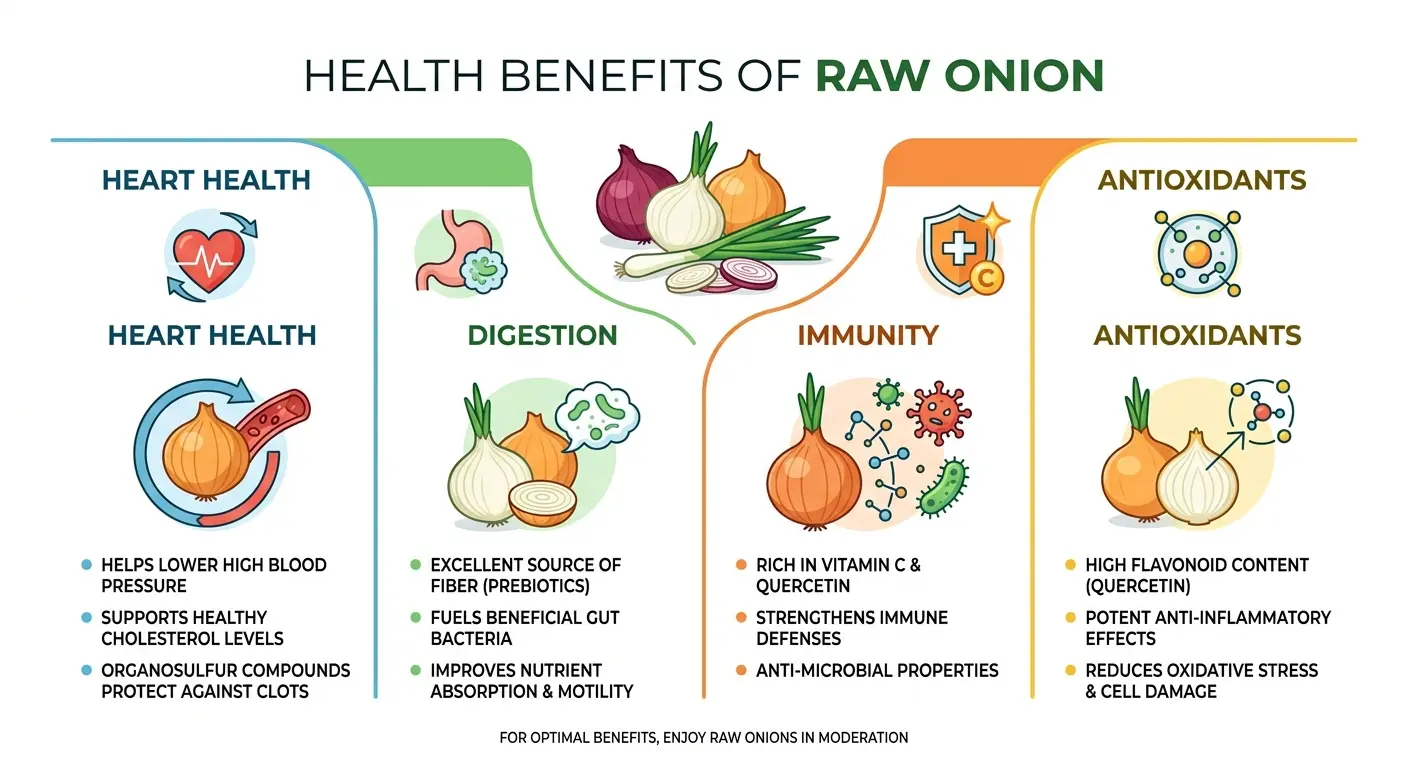
Eating raw onion daily can offer several health benefits when consumed in moderate amounts. The benefits of eating raw onion daily are mainly linked to its rich content of natural compounds like quercetin and sulfur compounds, which are known for their antioxidant and anti-inflammatory properties.
Regular intake may help support digestion by stimulating digestive enzymes and improving gut function. Some studies also suggest that onions may support heart health by helping manage cholesterol levels and improving blood circulation. These raw onion daily benefits make it a simple addition to a balanced diet.
In addition, onions contain vitamin C and other antioxidants that contribute to immune support. In hot climates like India, raw onion is also commonly consumed for its refreshing nature, which may help the body feel more balanced during extreme heat.
According to the USDA FoodData Central, the nutritional values of raw onion are as follows:
Onion Nutrition Facts (Based on USDA Data)
A quick look at the nutrition value of onions, based on USDA FoodData Central, shown in a simple format for easy understanding.
Per 100 g
Per Serving
Example: 1 medium onion (about 110 g)
Values are approximate and may vary based on onion type, size, and freshness. Data sourced from USDA FoodData Central.
Types of Onions and Their Uses
To fully understand the benefits of eating raw onion daily, it’s important to know that not all onions are the same. Different varieties have different flavors, strengths, and best uses. Some are ideal for eating raw, while others work better in cooking.

Red Onions
Red onions are the best choice when it comes to maximizing the benefits of eating raw onion daily. They have a mild, slightly sweet taste, making them easier to eat raw compared to other varieties. This is why they are commonly used in salads, sandwiches, and daily diets.
One of the biggest advantages of red onions is their high antioxidant content. They are rich in compounds like quercetin, flavonoids, and anthocyanins, which help reduce inflammation and support overall health. These compounds are especially concentrated in the outer layers, which is why fresh, raw consumption is often recommended.
According to scientific research on different onion varieties and their health properties, red onions generally contain higher levels of beneficial phytochemicals compared to yellow or white onions. This makes them a better option for those looking to improve immunity, heart health, and overall nutrition.
If your goal is to get the most out of the benefits of eating raw onion daily, red onions are usually the top recommendation due to their balanced taste and superior nutrient profile.
White Onions
White onions are known for their sharp, strong flavor and crisp texture. Compared to red onions, they are more pungent, which is why they are commonly used in cooking, especially in Indian dishes like curries, gravies, and stir-fries.
Although they are less commonly eaten raw, white onions still provide important nutrients and beneficial compounds that support overall health. They contain natural sulfur compounds that contribute to their strong taste and may help support digestion and heart health when included regularly in the diet.
Because of their intensity, white onions may not be suitable for everyone to eat raw daily. However, when used in balanced amounts, they can still be a valuable part of a healthy diet and contribute to the overall benefits of eating raw onion daily.
Yellow Onions
Yellow onions are one of the most commonly used onion varieties, known for their balanced flavor that becomes mild and slightly sweet when cooked. They are widely used in everyday cooking, including curries, soups, and sautéed dishes, making them a staple in many kitchens.
Compared to other varieties, yellow onions provide a good amount of beneficial plant compounds such as flavonoids and sulfur compounds. These natural components are linked to potential health benefits, including support for heart health and overall metabolic function.
According to a randomized controlled clinical trial titled “Consumption of Fresh Yellow Onion Ameliorates Hyperglycemia and Insulin Resistance in Breast Cancer Patients During Doxorubicin-Based Chemotherapy”, regular intake of raw yellow onion was associated with improved blood sugar control and better insulin sensitivity. This suggests that yellow onions may play a supportive role in managing metabolic health when included as part of a balanced diet.
Green Onions (Spring Onions)
Green onions, also known as spring onions, have a mild, fresh flavor and are commonly used as a garnish or added to salads, soups, and stir-fries. Unlike bulb onions, both the white base and green stalks are edible, making them a versatile addition to daily meals.
They are less pungent than red, white, or yellow onions, which makes them easier to eat raw. This mild taste makes green onions a great option for those who prefer a lighter onion flavor without strong sharpness.
According to a review article titled “Green Onion (Allium fistulosum): An Aromatic Vegetable Crop Esteemed for Food, Nutritional and Therapeutic Significance”, green onions are rich in essential nutrients, including vitamins A, C, and K, along with various bioactive compounds like polyphenols and sulfur compounds. These components are associated with antioxidant, anti-inflammatory, and immune-supporting effects, contributing to overall health and disease prevention.
Green onions also provide dietary fiber and plant compounds that may support digestion, heart health, and metabolic function when included regularly in the diet.
Because of their mild flavor and high nutritional value, green onions can be easily added to both raw and cooked dishes, making them a simple and effective way to enhance the benefits of eating onions as part of a healthy daily diet.
Onion Types Comparison: Which Onion Is Best?
Different onions have different taste, strength, nutrients, and best uses. This comparison helps you choose the right onion for daily meals.
Raw Onion vs Cooked Onion

Both raw and cooked onions have their own benefits, and the better option depends on how your body reacts to them. Raw onions generally contain a higher amount of certain antioxidants and sulfur compounds because heat can reduce some of these nutrients.
However, cooked onions are easier to digest and have a milder taste. Cooking also enhances their natural sweetness, making them more suitable for regular meals.
If your goal is to get maximum nutrients, raw onion can be beneficial. But if you experience discomfort like acidity or gas, cooked onions may be a better option. A balanced approach, using both raw and cooked onions in your diet, is often the most practical choice.
How Much Onion Should You Eat Daily?
There is no fixed amount that suits everyone, but for most people, eating about half to one medium-sized onion per day is considered a reasonable amount. This allows you to get the benefits without overloading your digestive system.
Eating too much onion at once may cause discomfort in some individuals, especially if consumed raw. It is always better to start with a small quantity and adjust based on how your body responds.
Who Should Avoid Eating Raw Onion?
Although onions are generally healthy, raw onion may not be suitable for everyone. People who have a sensitive stomach or conditions like acid reflux may experience irritation after eating raw onion.
Some individuals may also find the strong compounds in onions difficult to digest, leading to discomfort or bloating. In such cases, consuming onions in cooked form is usually a better option.
Side Effects of Eating Too Much Onion
Eating onion in excess can lead to certain side effects, especially when consumed raw in large amounts. While the benefits of eating raw onion daily are well known, overconsumption may cause issues like gas, bloating, and acidity. The strong sulfur compounds in onions can also cause bad breath, which may be uncomfortable in social situations.
These effects usually depend on the quantity consumed. When eaten in moderation as part of a balanced diet, onions are generally safe and beneficial.
Best Time to Eat Onion

Onions can be eaten at any time of the day, but they are most commonly consumed along with meals. Eating raw onion with lunch or dinner is a practical way to include it in your diet without causing discomfort.
Some people may experience irritation when eating raw onion on an empty stomach, so it is usually better to combine it with other foods.
Easy Ways to Add Onion to Your Daily Diet

Adding onion to your daily diet does not require major changes. It can be included in simple and familiar ways that fit easily into Indian meals. Raw onion slices with lemon and salt can be served alongside roti and sabzi. It can also be added to salads, sandwiches, and chaats for extra flavor and texture.
Cooked onions are already a part of many dishes like curries, dals, and vegetable preparations, making it easy to include them regularly without much effort.
Final Verdict
Onion is a simple yet valuable addition to the daily diet. The benefits of eating raw onion daily include support for digestion, heart health, and overall well-being. Raw onion offers slightly higher nutritional benefits, but it may not suit everyone.
The best approach is to include onions in a balanced way, using both raw and cooked forms based on your comfort and preference. Moderation and consistency matter more than consuming large amounts.
Frequently Asked Questions (FAQ)
Can we eat raw onion daily?
Yes, most people can eat raw onion daily in moderate amounts, but it depends on individual tolerance.
Which onion is best for eating raw?
Red onion is usually preferred because it has a milder taste and higher antioxidant content.
Is onion good for digestion?
Onions may support digestion by stimulating digestive enzymes, but excessive intake can cause discomfort in some people.
Does onion help immunity?
Onions contain vitamin C and antioxidants that may contribute to immune support.