Table of Contents
Curd for gut health can be good or bad depending on digestion strength and eating habits. If your digestion is strong, curd helps improve gut bacteria and digestion. However, if you suffer from acidity, gas, bloating, or loose motion, curd may worsen gut problems, especially when eaten at the wrong time.
Why Gut Problems Are So Common Today
Gut issues are very common due to modern eating habits. Frequent spicy food, irregular meal timings, tea on an empty stomach, late-night dinners, and packaged foods slowly weaken digestion. When digestion becomes sensitive, even healthy foods like curd can start causing discomfort.
This is why some people feel relief after eating curd, while others experience gas or acidity.
Benefits of Curd for Gut Health
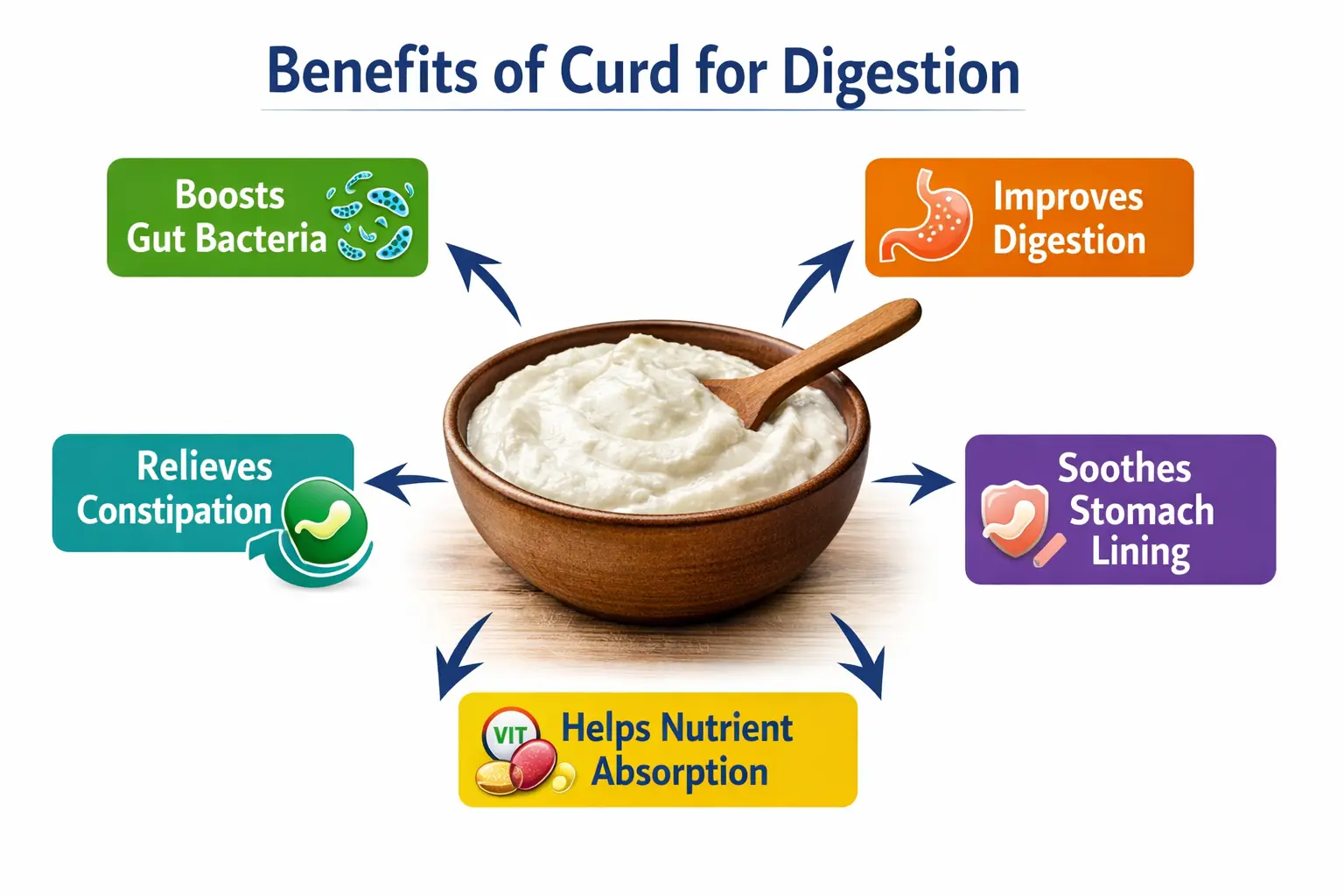
Curd for gut health works best when digestion is strong and meal timing is correct.
Curd is a natural fermented food that contains probiotics. These good bacteria help maintain a healthy balance in the gut and support digestion. For people with normal digestion, curd can improve bowel movement and reduce mild constipation.
Curd also helps the body absorb nutrients better and may soothe the stomach lining. When eaten during the daytime with meals, many people feel lighter and more comfortable after digestion.
Curd supports gut health only when digestion is already stable.
According to a 2022 review published in the journal Nutrients (NCBI), fermented foods like curd and buttermilk can positively influence the gut microbiome by supporting healthy gut bacteria and improving digestion over time.
A randomized controlled study published on PubMed (NIH) found that regular curd consumption improved digestive comfort and reduced abdominal discomfort in healthy adults when consumed as part of a balanced diet.
Side Effects of Curd on Gut Health
Curd can cause problems when digestion is weak. Eating curd at night or on an empty stomach may lead to acidity, heaviness, gas, or bloating. Cold or plain curd is harder to digest and may disturb gut balance in sensitive people.
People who are lactose sensitive may experience loose motion or stomach pain after eating curd. Consuming large quantities daily can also create imbalance instead of improving gut health.
This is why curd should be eaten carefully and in moderation.
Best Time to Eat Curd for Digestion
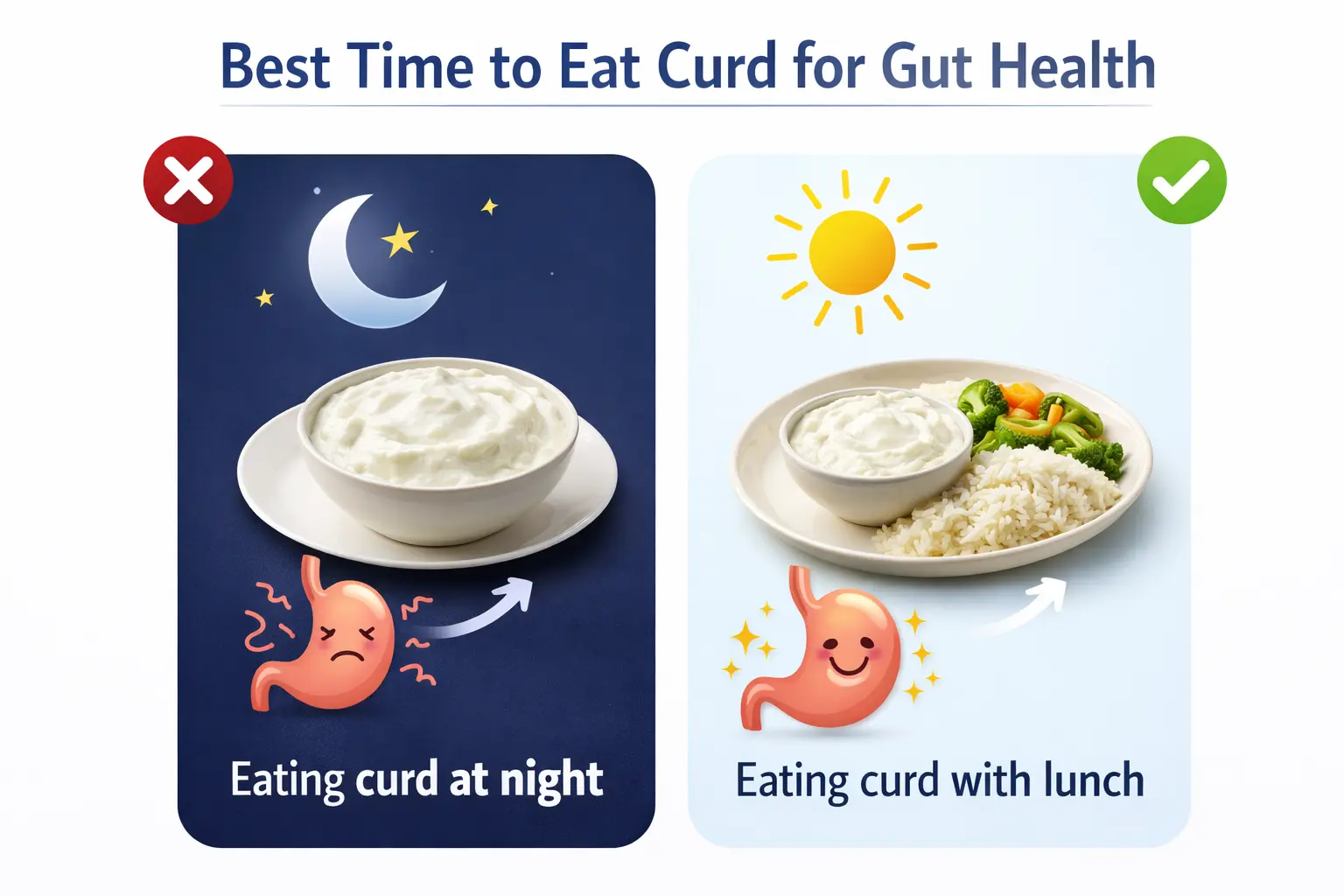
Eating curd for gut health during daytime improves digestion and reduces acidity risk.preferably with lunch. At this time, digestion power is strongest, making it easier for the gut to handle fermented foods.
Eating curd early in the morning or late at night is not recommended, especially for people with acidity or gas issues.
Best Way to Eat Curd (Indian Method)
Curd should not be eaten plain if you have gut sensitivity. Combining it with digestion-friendly ingredients makes it safer and easier to digest.
Curd mixed with roasted jeera, used as vegetable raita, or eaten in small quantity with rice is gentler on the stomach. Buttermilk (chaas) is an even better daily option because it is lighter and less acidic.
Foods to Avoid Eating with Curd
Certain food combinations may make curd harder to digest. Eating curd along with heavy, oily, or very spicy non-vegetarian foods can increase gas, acidity, and stomach heaviness in some people. Deep-fried foods mixed with curd may also disturb gut balance. If digestion is sensitive, it is better to eat curd with light meals like rice or vegetables rather than combining it with heavy foods.
Who Should Avoid or Limit Curd
People with chronic acidity, IBS, frequent loose motion, or regular cold and cough should limit curd intake. If curd repeatedly causes discomfort, it is better to reduce quantity or switch to buttermilk.
Always observe how your body reacts instead of following general advice.
Curd vs Buttermilk for Gut Health
Both curd and buttermilk are fermented dairy products that support gut health, but they differ in digestibility and suitability depending on your digestive strength.
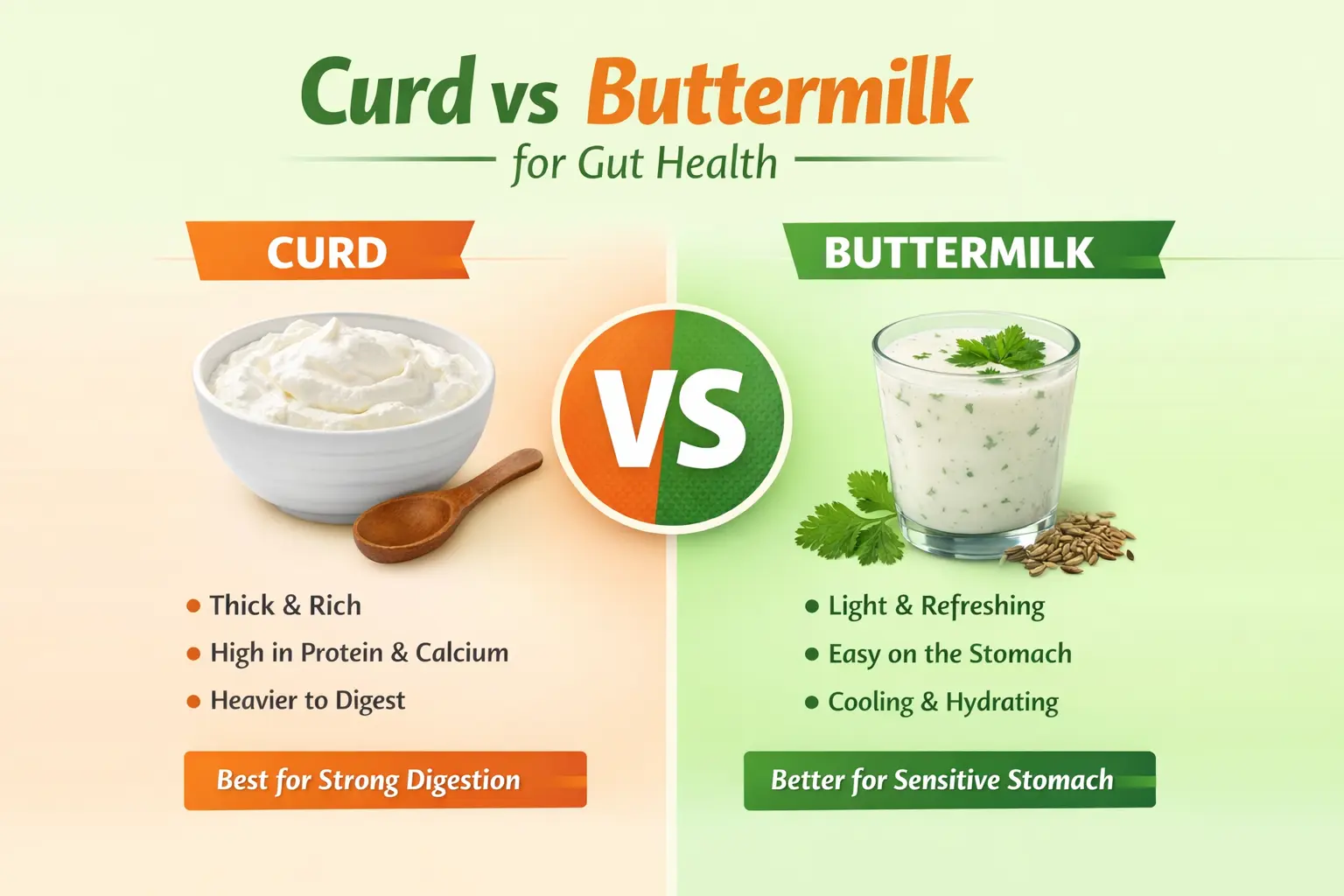
- Curd is thicker and more concentrated, which makes it rich in protein, calcium, and probiotics. It works well for people with strong digestion, but it can feel heavy for those prone to acidity, bloating, or mild stomach discomfort. Eating too much curd at once or at the wrong time may sometimes disturb gut balance.
- Buttermilk (Chaas) is thinner, lighter, and often slightly salted or spiced with cumin, making it much easier to digest. It is ideal for daily consumption, especially for those with moderate digestion or anyone looking for a cooling, refreshing drink after meals. Buttermilk also hydrates the body while gently supporting gut bacteria.
Practical Tip:
- If you have strong digestion and want maximum nutrients, small portions of curd with meals are great.
- If you want gentle daily gut support or have a slightly sensitive stomach, buttermilk is usually the safer and more comfortable choice.
FAQ
Why does curd cause acidity or bloating in some people?
Curd may cause acidity or bloating when digestion is weak, or when it is eaten at night, on an empty stomach, or in large amounts. Cold or plain curd is also harder to digest for sensitive stomachs.
Is buttermilk better than curd for gut health?
Yes, for many people buttermilk (chaas) is better than curd because it is lighter, easier to digest, and less acidic. It is especially suitable for daily consumption and for people with mild gut sensitivity.
Final Verdict: Is Curd Good or Bad for Gut Health?
Curd is neither completely good nor completely bad for gut health — it depends on your digestion strength, quantity, timing, and the way you eat it.
If your digestion is strong and stable, curd can support gut bacteria, improve digestion, and provide valuable nutrients when eaten during the daytime with meals. In such cases, curd acts as a natural probiotic and helps maintain gut balance.
However, if you suffer from acidity, gas, bloating, or loose motions, curd may worsen gut discomfort — especially when eaten at night, on an empty stomach, or in large amounts. For sensitive digestion, buttermilk (chaas) is often a safer and lighter alternative for daily use.
The key takeaway is simple:
Listen to your body. A food that suits one person may not suit another. Instead of blindly following trends, observe how your gut reacts and adjust accordingly.
When eaten mindfully and in the right way, curd can be a helpful part of an Indian gut-friendly diet — but it is not compulsory for good gut health.
Tip: If curd causes discomfort, switch to buttermilk for a few weeks and notice the difference. Small changes often make the biggest impact on gut health.